
Publications
Challenging Realities: U.S. Social Sector Leaders Share Wisdom and Courage Across Borders: Japan–U.S. Social Innovation Network Event Report (Part 2)
Challenging Realities: U.S. Social Sector Leaders Share Wisdom and Courage Across Borders: Japan–U.S. Social Innovation Network Event Report (Part 2)
Challenging Realities: U.S. Social Sector Leaders Share Wisdom and Courage Across Borders: Japan–U.S. Social Innovation Network Event Report (Part 2)
This article is an English translation of a post originally published on ETIC's DRIVE Media in March 2026. Read the original article here.
NPO ETIC, which operates the media platform DRIVE, has supported social entrepreneurs for over 25 years since 2001. Its network of social entrepreneurs extends beyond Japan, fostering many memorable encounters with leaders across Europe, North America, and Asia.
Against this backdrop, in late October 2025, a two-day program titled the Japan–U.S. Social Innovation Network (JUSSIN) was held with a grant from the U.S.–Japan Foundation. The program was co-hosted by ETIC. and NPO Crossfields, with the cooperation of the Japan Association of New Public (JANP). The aim was to create dialogues that could become breakthroughs for solving social challenges through exchange and knowledge-sharing among leaders from the Japanese and U.S. social sectors.
Day two brought together U.S. social sector leaders who continue to confront ever-changing and difficult realities on the ground, sharing wisdom and courage across borders. This article is the second installment of the event report on Japan–U.S. Social Innovation Network.
In this second part of the report, we continue with the inspiration sessions led by invited leaders from the United States.
Read Part 1 here: https://drivemedia.etic.or.jp/72700/

“Just One Trustworthy Adult Can Change a Young Person’s Life” — Colby Swettberg, CEO, Silver Lining Mentoring
Our third speaker was Colby Swettberg, CEO of Silver Lining Mentoring (SLM), a national leader in supporting youth in foster care and transforming mentoring practices.

SLM’s mission is to help young people in the foster care system develop healthy mentoring relationships and essential life skills. The organization pairs one volunteer adult mentor with one young person in foster care, committing to at least one year of engagement with a minimum of eight hours per month.
The challenges facing young people in foster care in the U.S. are often misunderstood. Contrary to the image evoked by the term “foster care”—placing children into the homes of foster families—the reality is often one in which young people are separated from their families of origin and experience extreme instability from being frequently moved and living in multiple institutional settings with paid paraprofessional caregivers. These practices disproportionately affect Black, Indigenous, and Latino youth, as well LGBTQ youth and low-income families.
Youth in foster care rarely have a say in where, when and with whom they are moved. Sometimes, in the middle of the night or in the middle of a school day, social workers and police officers show up unannounced, hand a child a black trash bag, and instruct the child to put their belongings the trash bag and get into the social worker’s car. The child is often not given a chance to say goodbye and they don’t often know when they’ll see their siblings or parents again. Youth are then placed in the care of strangers and must begin new lives at new schools in new communities. And this doesn’t happen just once—it happens over and over again, leading to repeated ruptures in relationships. Youth in foster care in the U.S. are often moved multiple times in one year.
“Most of the adults with whom foster youth spend time are paid to be there. Few adults know them longer than a handful of months. Then, at age 18, they are told, ‘You’re an adult now, you’re independent,’ and they’re set loose from the child welfare system without the safety nets that all young adults need, even under the best circumstances,” Colby said. “How many 18 year olds do you know who are ready to live completely independently, without financial or social-emotional support? How many 18 year olds are prepared to find and maintain a job with a livable wage, secure stable housing, navigate transportation and healthcare and in some cases balance education or parenting on top of everything else? We all need help figuring out “adulting” and that’s especially true for young people in foster care who haven’t had consistent healthy role models nor opportunities to learn and practice these skills. The stakes are unfairly high for young people aging out of foster care.
According to the Center on the Developing Child at Harvard University, the single most important factor in healthy youth development and kids developing resilience is the presence of a stable, consistent relationship with a caring adult. That is why consistent, positive relationships are a lifeline for young people in foster care.
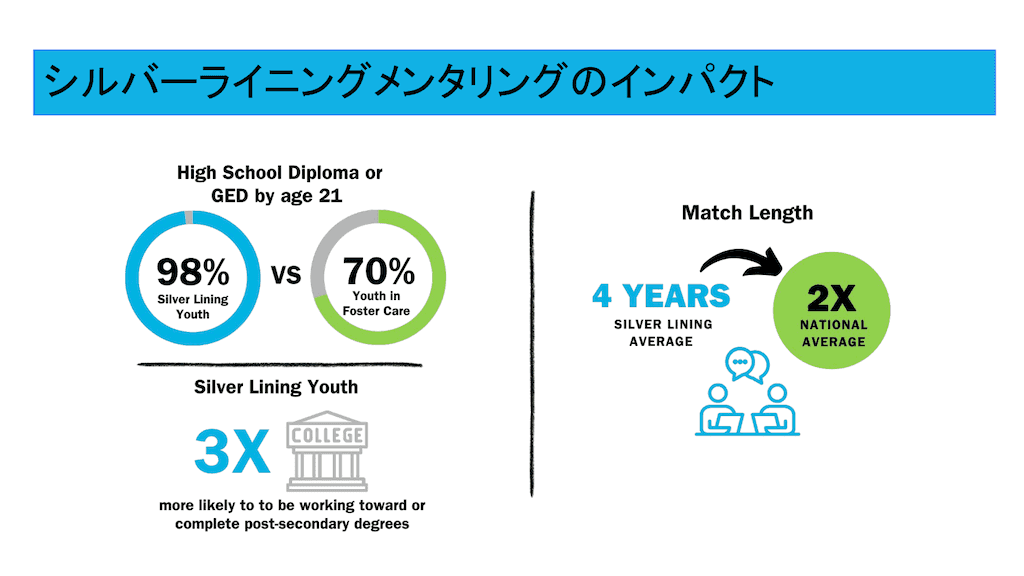
(Young people supported by SLM graduate from high school at higher rates and have higher college enrollment rates than non-SLM youth. Silver Lining’s mentor-mentee match relationships last twice as long as the national average match length in the U.S.)
Since becoming CEO in 2009, Colby has increased the number of young people served more than eightfold and expanded the organization’s operating budget more than fourfold, achieving strategic organizational growth. Colby is also a TEDx speaker, educator, and board member for other nonprofit organizations.
Colby spoke about the journey of becoming a non-profit leader as part of a live demonstration of the power of storytelling—a crucial tool for engaging supporters within social movements.
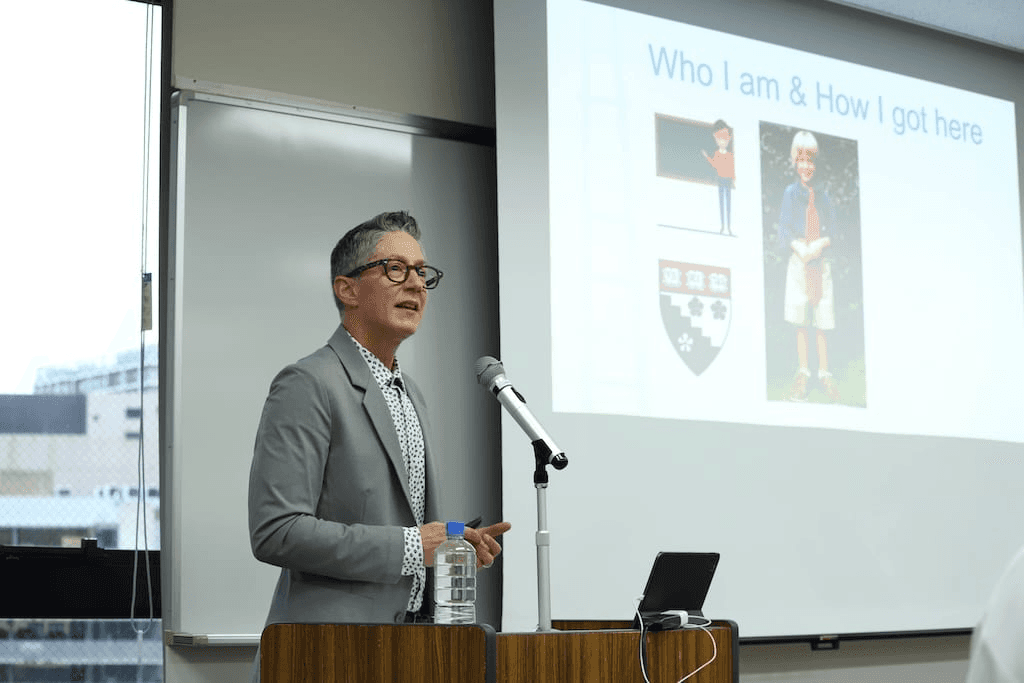
(Colby reflecting on how life experiences shaped their values and approach to leadership.)
After college, Colby began working as a high school English teacher and connected with students facing a wide range of challenges— from teens who were managing homelessness or struggling with substance use, to young people who had difficulty with truancy or finding a sense of belonging as queer youth.
Over time, Colby realized that beyond teaching English, there was a deep desire to address the challenges faced by young people who felt invisible or isolated because they did not see themselves represented in the wider world.
To pursue a new career path aligned with that calling, Colby enrolled in graduate school at Harvard University. While struggling with imposter syndrome, Colby recalls a professor saying, “Whether you like it or not, the name ‘Harvard’ opens doors.” Colby was committed to utilizing that opportunity for social good.
“It was a new world I had never known,” Colby reflected. “As a white person, I’ve often passed through doors opened to me without even noticing them—that’s what privilege is. But as a queer person, I’m also keenly aware of the many doors that are closed to me. That’s why I want to be intentional about using my privilege as a white Harvard graduate to open doors for others and to take responsibility for that privilege.”
After graduating, Colby worked at the nation’s first group home specifically for LGBTQ youth in foster care. A colleague there once said, “You’re a social worker at heart.” That comment inspired Colby to return to graduate school to earn a second master’s degree in social work.
Later, a former supervisor encouraged Colby to apply for the CEO position at SLM. Colby was hesitant to apply but was persuaded by their advice: “Every few years, apply for a job that’s a challenge - one that seems beyond where you are now. It’s okay if it’s scary—that’s probably a sign it’s the right move.”
“My leadership story has always been shaped by relationships with people who truly saw me—those who called me a social worker, who recognized my skills and potential, and those who encouraged me to take on challenges I never imagined for myself,” Colby said. “Those relationships allowed me to see my strengths and gave me a sense of belonging in the professional world.
“I decided to join SLM to bring that sense of belonging to young people in foster care who have been denied opportunities to build healthy relationships. I believe this sense of belonging is the essential foundation for human growth.”
Colby then shared concrete examples of the strategic steps that enabled SLM’s growth—building relationships with advisors and funders, developing a highly specialized staff team, initiating key partnerships, establishing a research institute, and strengthening and expanding mentoring programs—all in service of providing consistent mentoring relationships for more youth in foster care.
“Because at the end of the day, not every young person has one, but every young person deserves a silver lining.”

“What System Reform Brought Us Were Just Numbers” - Melissa Sawyer, Co-Founder & CEO, Youth Empowerment Project
Our next guest was Melissa Sawyer, Co-Founder and CEO of the Youth Empowerment Project (YEP), which launched Louisiana’s first program dedicated to supporting young people returning from juvenile incarceration to their homes and communities.
Melissa began her work through Teach For America, teaching at a high school in New Orleans, which led her to spend three years engaged in juvenile justice reform in Louisiana. In 2004, she co-founded YEP.
Under her leadership, YEP has grown into one of the region’s largest and most comprehensive youth support organizations, operating five sites in southeastern Louisiana and providing approximately 1,000 young people each year with free access to education, employment, experiential learning, and mentoring.
Born in Canada and a graduate of McGill University, Melissa taught high school in New Orleans for two years and formed deep bonds with her students. Tragically, many of those young people later lost their lives—either to gun violence or to incarceration in the notorious Tallulah juvenile prison, known for widespread human rights abuses. Some have now been incarcerated for more than 25 years.
“When I look back, the realities the United States continues to face have become the theme of my life,” Melissa said. “The violence and grief that filled American cities—especially my experiences in New Orleans—became the driving force behind my commitment to juvenile justice reform and the founding of YEP.”
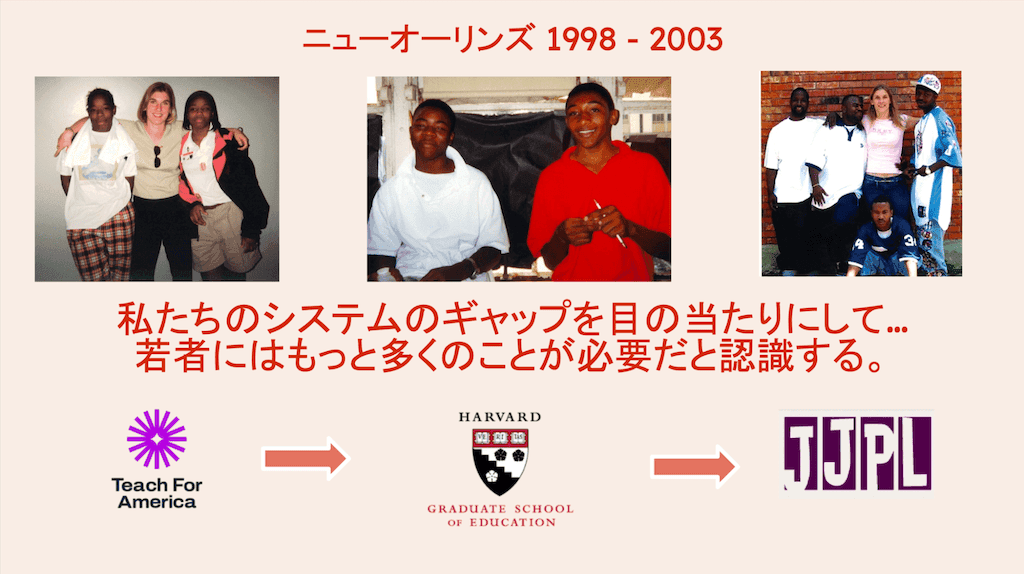
( Many of the young people pictured here were killed by gun violence or remain incarcerated to this day.)
Seeking deeper expertise, Melissa went on to Harvard University, where she worked on juvenile justice projects. In 2001, she returned to New Orleans to keep a promise she had made to her former students and began tackling statewide juvenile justice reform in Louisiana, then known for having the highest youth incarceration rates and a highly punitive approach.
At the time, there was virtually no support for young people after release. Many were simply monitored through ankle bracelets that restricted their movement.
Through these efforts, Melissa and her colleagues helped reduce the number of incarcerated youth from over 1,500 to fewer than 800, contributed to legislation shifting investment toward youth and alternatives to incarceration, and used the first grants issued under the new law to co-found YEP as the state’s first juvenile reentry program.
“We challenged the system because we had lost so many young people to the criminal justice system,” Melissa reflected. “But what the new policies brought us felt like nothing more than numbers. What truly matters are human lives. That’s why we began directly supporting formerly incarcerated young people.”
With an initial budget of just $235,000, three founders, and a staff of five, YEP was only able to support two young people in its first year. In 2005, after Hurricane Katrina devastated New Orleans, YEP’s office was fortunately spared from flooding, allowing it to reopen as a vital community hub.
In Louisiana, inequities in the post-hurricane recovery process widened gaps between white and Black families. Many African American youth struggled to graduate because existing systems failed to support their realities—teen parenthood, foster care, or reentry after incarceration. In response, YEP launched high school equivalency and alternative diploma programs.
With over $1 million in funding from a Swiss foundation, YEP also built a Working Learning Center and launched vocational training programs for youth aged 16 to 24, allowing them to earn income through businesses such as a bicycle shop and recycling store while learning. These social enterprises now generate approximately $200,000 in annual revenue.
As gentrification continued to raise property values in the neighborhoods where YEP operates, low-income residents were increasingly displaced. YEP responded by purchasing properties and opening them to youth and their families, creating stability and a sense of security within the community.
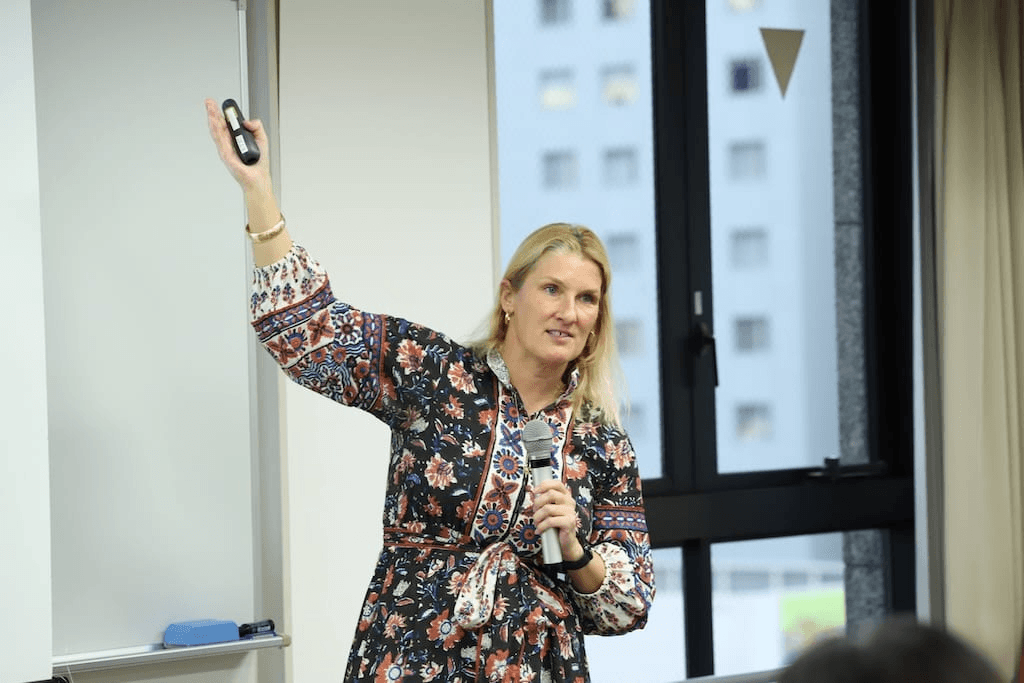
“What I want to leave you with,” Melissa said, “is this: return to the data, return to success, return to strength. When leaders are seen as people worth betting on, the potential for growth increases. At the same time, humility is essential. I’ve been fortunate to have incredible opportunities, but that doesn’t mean I’m wiser than the young people and staff who remain in the U.S.
“A young person once said to me, ‘When you reach the top, you’ll take the elevator back down and bring the rest of us up with you, right?’ Staying grounded, remaining humble, and creating opportunities for others—that’s how we should live.”
Cultivating Relationships Where Social Sector Leaders Can Share Wisdom and Courage Across Borders
After an inspiring first day, the second day of the JUSSIN program began with themed group discussions that allowed participants to dive deeper into each guest’s area of expertise. The themes and facilitators were as follows:
“Nothing About Us Without Us: Co-Creation, Collaboration, and Youth Power in Systems Change” (Joshua)
“A Framework for Evaluating Alliances” (Ariel)
“JUSSIN 2.0: Growing Together, What’s Next” (Cosmo)
“Building Resilient, Sustainable Nonprofits: Focusing on Today and the Future” (Melissa)
“The Power of Authenticity in Leadership” (Colby)

(Strategic discussions for the next JUSSIN gathered around Cosmo.)
In the afternoon, participants took part in one-on-one mentoring sessions—one of the highlights of the program. Because the guests had carefully reviewed each organization’s background and prepared tailored support in advance, many participants described these sessions as the most impactful part of the experience.


One participant shared:
This was the first time I received such structured feedback. They first helped me unpack and validate my personal emotions around organizational challenges from a psychological perspective, accepting me as a human being. Then they organized our organizational realities with professional insight and worked with me to identify concrete next steps. I felt such relief that I cried—and gained the courage to move forward.” (Some details have been altered to protect privacy.)
Over the two days, participants discovered shared challenges in management across the Japanese and U.S. social sectors. Mentoring from U.S. leaders—whose social sector has a longer history—became a defining moment that helped Japanese leaders move both themselves and their organizations forward.
Many also noted the value of the JUSSIN space itself: not only meeting U.S. leaders, but also forming deeper connections among Japanese leaders, strengthening peer relationships.
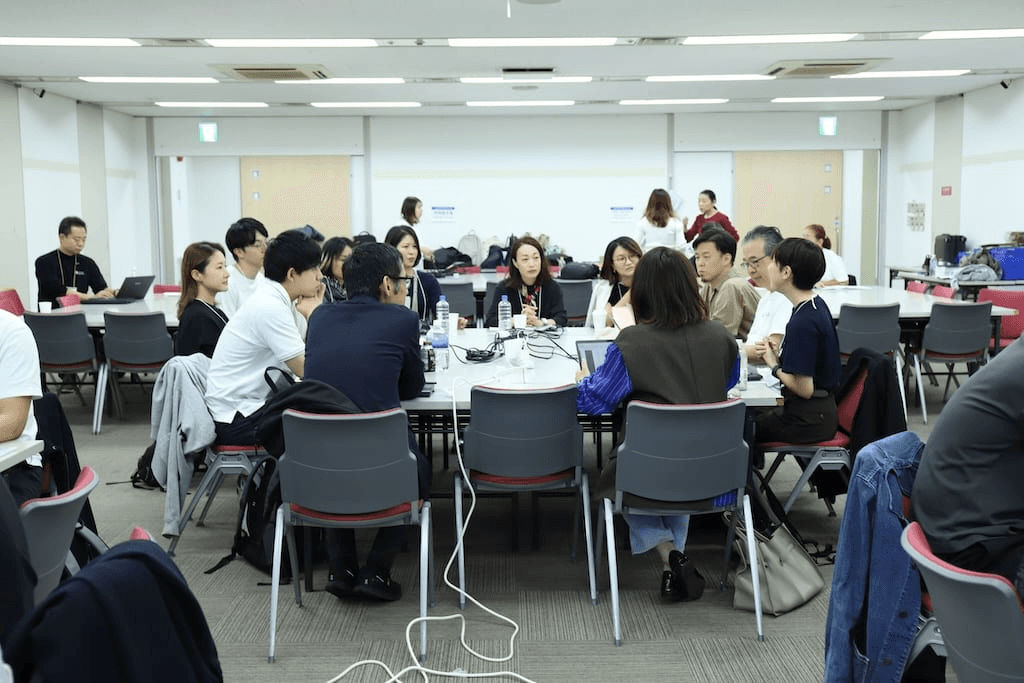
(Behind the scenes of one-on-one mentoring, Japanese leaders were also seen sharing candid consultations with one another. “Being able to discuss finances and other sensitive topics so openly is incredibly valuable,” one participant noted.)
After two packed days of learning, the JUSSIN training concluded successfully. This report may seem to end here—but all five guests also led sessions at a retreat hosted by the Japan Association of New Public (JANP) the following day (with some participants attending both the training and the retreat!). The story continues in a third installment—stay tuned.

(A networking reception was held on the evening of Day 1. At the after-party, guests reportedly enjoyed one of Japan’s most famous cultural experiences—karaoke!))
This article is an English translation of a post originally published on ETIC's DRIVE Media in March 2026. Read the original article here.
NPO ETIC, which operates the media platform DRIVE, has supported social entrepreneurs for over 25 years since 2001. Its network of social entrepreneurs extends beyond Japan, fostering many memorable encounters with leaders across Europe, North America, and Asia.
Against this backdrop, in late October 2025, a two-day program titled the Japan–U.S. Social Innovation Network (JUSSIN) was held with a grant from the U.S.–Japan Foundation. The program was co-hosted by ETIC. and NPO Crossfields, with the cooperation of the Japan Association of New Public (JANP). The aim was to create dialogues that could become breakthroughs for solving social challenges through exchange and knowledge-sharing among leaders from the Japanese and U.S. social sectors.
Day two brought together U.S. social sector leaders who continue to confront ever-changing and difficult realities on the ground, sharing wisdom and courage across borders. This article is the second installment of the event report on Japan–U.S. Social Innovation Network.
In this second part of the report, we continue with the inspiration sessions led by invited leaders from the United States.
Read Part 1 here: https://drivemedia.etic.or.jp/72700/
“Just One Trustworthy Adult Can Change a Young Person’s Life” — Colby Swettberg, CEO, Silver Lining Mentoring
Our third speaker was Colby Swettberg, CEO of Silver Lining Mentoring (SLM), a national leader in supporting youth in foster care and transforming mentoring practices.
SLM’s mission is to help young people in the foster care system develop healthy mentoring relationships and essential life skills. The organization pairs one volunteer adult mentor with one young person in foster care, committing to at least one year of engagement with a minimum of eight hours per month.
The challenges facing young people in foster care in the U.S. are often misunderstood. Contrary to the image evoked by the term “foster care”—placing children into the homes of foster families—the reality is often one in which young people are separated from their families of origin and experience extreme instability from being frequently moved and living in multiple institutional settings with paid paraprofessional caregivers. These practices disproportionately affect Black, Indigenous, and Latino youth, as well LGBTQ youth and low-income families.
Youth in foster care rarely have a say in where, when and with whom they are moved. Sometimes, in the middle of the night or in the middle of a school day, social workers and police officers show up unannounced, hand a child a black trash bag, and instruct the child to put their belongings the trash bag and get into the social worker’s car. The child is often not given a chance to say goodbye and they don’t often know when they’ll see their siblings or parents again. Youth are then placed in the care of strangers and must begin new lives at new schools in new communities. And this doesn’t happen just once—it happens over and over again, leading to repeated ruptures in relationships. Youth in foster care in the U.S. are often moved multiple times in one year.
“Most of the adults with whom foster youth spend time are paid to be there. Few adults know them longer than a handful of months. Then, at age 18, they are told, ‘You’re an adult now, you’re independent,’ and they’re set loose from the child welfare system without the safety nets that all young adults need, even under the best circumstances,” Colby said. “How many 18 year olds do you know who are ready to live completely independently, without financial or social-emotional support? How many 18 year olds are prepared to find and maintain a job with a livable wage, secure stable housing, navigate transportation and healthcare and in some cases balance education or parenting on top of everything else? We all need help figuring out “adulting” and that’s especially true for young people in foster care who haven’t had consistent healthy role models nor opportunities to learn and practice these skills. The stakes are unfairly high for young people aging out of foster care.
According to the Center on the Developing Child at Harvard University, the single most important factor in healthy youth development and kids developing resilience is the presence of a stable, consistent relationship with a caring adult. That is why consistent, positive relationships are a lifeline for young people in foster care.
(Young people supported by SLM graduate from high school at higher rates and have higher college enrollment rates than non-SLM youth. Silver Lining’s mentor-mentee match relationships last twice as long as the national average match length in the U.S.)
Since becoming CEO in 2009, Colby has increased the number of young people served more than eightfold and expanded the organization’s operating budget more than fourfold, achieving strategic organizational growth. Colby is also a TEDx speaker, educator, and board member for other nonprofit organizations.
Colby spoke about the journey of becoming a non-profit leader as part of a live demonstration of the power of storytelling—a crucial tool for engaging supporters within social movements.
(Colby reflecting on how life experiences shaped their values and approach to leadership.)
After college, Colby began working as a high school English teacher and connected with students facing a wide range of challenges— from teens who were managing homelessness or struggling with substance use, to young people who had difficulty with truancy or finding a sense of belonging as queer youth.
Over time, Colby realized that beyond teaching English, there was a deep desire to address the challenges faced by young people who felt invisible or isolated because they did not see themselves represented in the wider world.
To pursue a new career path aligned with that calling, Colby enrolled in graduate school at Harvard University. While struggling with imposter syndrome, Colby recalls a professor saying, “Whether you like it or not, the name ‘Harvard’ opens doors.” Colby was committed to utilizing that opportunity for social good.
“It was a new world I had never known,” Colby reflected. “As a white person, I’ve often passed through doors opened to me without even noticing them—that’s what privilege is. But as a queer person, I’m also keenly aware of the many doors that are closed to me. That’s why I want to be intentional about using my privilege as a white Harvard graduate to open doors for others and to take responsibility for that privilege.”
After graduating, Colby worked at the nation’s first group home specifically for LGBTQ youth in foster care. A colleague there once said, “You’re a social worker at heart.” That comment inspired Colby to return to graduate school to earn a second master’s degree in social work.
Later, a former supervisor encouraged Colby to apply for the CEO position at SLM. Colby was hesitant to apply but was persuaded by their advice: “Every few years, apply for a job that’s a challenge - one that seems beyond where you are now. It’s okay if it’s scary—that’s probably a sign it’s the right move.”
“My leadership story has always been shaped by relationships with people who truly saw me—those who called me a social worker, who recognized my skills and potential, and those who encouraged me to take on challenges I never imagined for myself,” Colby said. “Those relationships allowed me to see my strengths and gave me a sense of belonging in the professional world.
“I decided to join SLM to bring that sense of belonging to young people in foster care who have been denied opportunities to build healthy relationships. I believe this sense of belonging is the essential foundation for human growth.”
Colby then shared concrete examples of the strategic steps that enabled SLM’s growth—building relationships with advisors and funders, developing a highly specialized staff team, initiating key partnerships, establishing a research institute, and strengthening and expanding mentoring programs—all in service of providing consistent mentoring relationships for more youth in foster care.
“Because at the end of the day, not every young person has one, but every young person deserves a silver lining.”
“What System Reform Brought Us Were Just Numbers” - Melissa Sawyer, Co-Founder & CEO, Youth Empowerment Project
Our next guest was Melissa Sawyer, Co-Founder and CEO of the Youth Empowerment Project (YEP), which launched Louisiana’s first program dedicated to supporting young people returning from juvenile incarceration to their homes and communities.
Melissa began her work through Teach For America, teaching at a high school in New Orleans, which led her to spend three years engaged in juvenile justice reform in Louisiana. In 2004, she co-founded YEP.
Under her leadership, YEP has grown into one of the region’s largest and most comprehensive youth support organizations, operating five sites in southeastern Louisiana and providing approximately 1,000 young people each year with free access to education, employment, experiential learning, and mentoring.
Born in Canada and a graduate of McGill University, Melissa taught high school in New Orleans for two years and formed deep bonds with her students. Tragically, many of those young people later lost their lives—either to gun violence or to incarceration in the notorious Tallulah juvenile prison, known for widespread human rights abuses. Some have now been incarcerated for more than 25 years.
“When I look back, the realities the United States continues to face have become the theme of my life,” Melissa said. “The violence and grief that filled American cities—especially my experiences in New Orleans—became the driving force behind my commitment to juvenile justice reform and the founding of YEP.”
( Many of the young people pictured here were killed by gun violence or remain incarcerated to this day.)
Seeking deeper expertise, Melissa went on to Harvard University, where she worked on juvenile justice projects. In 2001, she returned to New Orleans to keep a promise she had made to her former students and began tackling statewide juvenile justice reform in Louisiana, then known for having the highest youth incarceration rates and a highly punitive approach.
At the time, there was virtually no support for young people after release. Many were simply monitored through ankle bracelets that restricted their movement.
Through these efforts, Melissa and her colleagues helped reduce the number of incarcerated youth from over 1,500 to fewer than 800, contributed to legislation shifting investment toward youth and alternatives to incarceration, and used the first grants issued under the new law to co-found YEP as the state’s first juvenile reentry program.
“We challenged the system because we had lost so many young people to the criminal justice system,” Melissa reflected. “But what the new policies brought us felt like nothing more than numbers. What truly matters are human lives. That’s why we began directly supporting formerly incarcerated young people.”
With an initial budget of just $235,000, three founders, and a staff of five, YEP was only able to support two young people in its first year. In 2005, after Hurricane Katrina devastated New Orleans, YEP’s office was fortunately spared from flooding, allowing it to reopen as a vital community hub.
In Louisiana, inequities in the post-hurricane recovery process widened gaps between white and Black families. Many African American youth struggled to graduate because existing systems failed to support their realities—teen parenthood, foster care, or reentry after incarceration. In response, YEP launched high school equivalency and alternative diploma programs.
With over $1 million in funding from a Swiss foundation, YEP also built a Working Learning Center and launched vocational training programs for youth aged 16 to 24, allowing them to earn income through businesses such as a bicycle shop and recycling store while learning. These social enterprises now generate approximately $200,000 in annual revenue.
As gentrification continued to raise property values in the neighborhoods where YEP operates, low-income residents were increasingly displaced. YEP responded by purchasing properties and opening them to youth and their families, creating stability and a sense of security within the community.
“What I want to leave you with,” Melissa said, “is this: return to the data, return to success, return to strength. When leaders are seen as people worth betting on, the potential for growth increases. At the same time, humility is essential. I’ve been fortunate to have incredible opportunities, but that doesn’t mean I’m wiser than the young people and staff who remain in the U.S.
“A young person once said to me, ‘When you reach the top, you’ll take the elevator back down and bring the rest of us up with you, right?’ Staying grounded, remaining humble, and creating opportunities for others—that’s how we should live.”
Cultivating Relationships Where Social Sector Leaders Can Share Wisdom and Courage Across Borders
After an inspiring first day, the second day of the JUSSIN program began with themed group discussions that allowed participants to dive deeper into each guest’s area of expertise. The themes and facilitators were as follows:
“Nothing About Us Without Us: Co-Creation, Collaboration, and Youth Power in Systems Change” (Joshua)
“A Framework for Evaluating Alliances” (Ariel)
“JUSSIN 2.0: Growing Together, What’s Next” (Cosmo)
“Building Resilient, Sustainable Nonprofits: Focusing on Today and the Future” (Melissa)
“The Power of Authenticity in Leadership” (Colby)
(Strategic discussions for the next JUSSIN gathered around Cosmo.)
In the afternoon, participants took part in one-on-one mentoring sessions—one of the highlights of the program. Because the guests had carefully reviewed each organization’s background and prepared tailored support in advance, many participants described these sessions as the most impactful part of the experience.
One participant shared:
This was the first time I received such structured feedback. They first helped me unpack and validate my personal emotions around organizational challenges from a psychological perspective, accepting me as a human being. Then they organized our organizational realities with professional insight and worked with me to identify concrete next steps. I felt such relief that I cried—and gained the courage to move forward.” (Some details have been altered to protect privacy.)
Over the two days, participants discovered shared challenges in management across the Japanese and U.S. social sectors. Mentoring from U.S. leaders—whose social sector has a longer history—became a defining moment that helped Japanese leaders move both themselves and their organizations forward.
Many also noted the value of the JUSSIN space itself: not only meeting U.S. leaders, but also forming deeper connections among Japanese leaders, strengthening peer relationships.
(Behind the scenes of one-on-one mentoring, Japanese leaders were also seen sharing candid consultations with one another. “Being able to discuss finances and other sensitive topics so openly is incredibly valuable,” one participant noted.)
After two packed days of learning, the JUSSIN training concluded successfully. This report may seem to end here—but all five guests also led sessions at a retreat hosted by the Japan Association of New Public (JANP) the following day (with some participants attending both the training and the retreat!). The story continues in a third installment—stay tuned.