Publications
Reimagining the Future of Civil Society and NPOs: Japan–U.S. Social Innovation Network Program Report, Part I
Reimagining the Future of Civil Society and NPOs: Japan–U.S. Social Innovation Network Program Report, Part I
Reimagining the Future of Civil Society and NPOs: Japan–U.S. Social Innovation Network Program Report, Part I
This article is an English translation of a post originally published on ETIC's DRIVE Media in December 2025. Read the original article here.
The “DRIVE Media” platform operated by the nonprofit organization ETIC has supported social entrepreneurs for 25 years since 2001. ETIC’s network of social entrepreneurs has expanded across national borders, fostering many memorable encounters with leaders in Europe, the United States, and Asia.
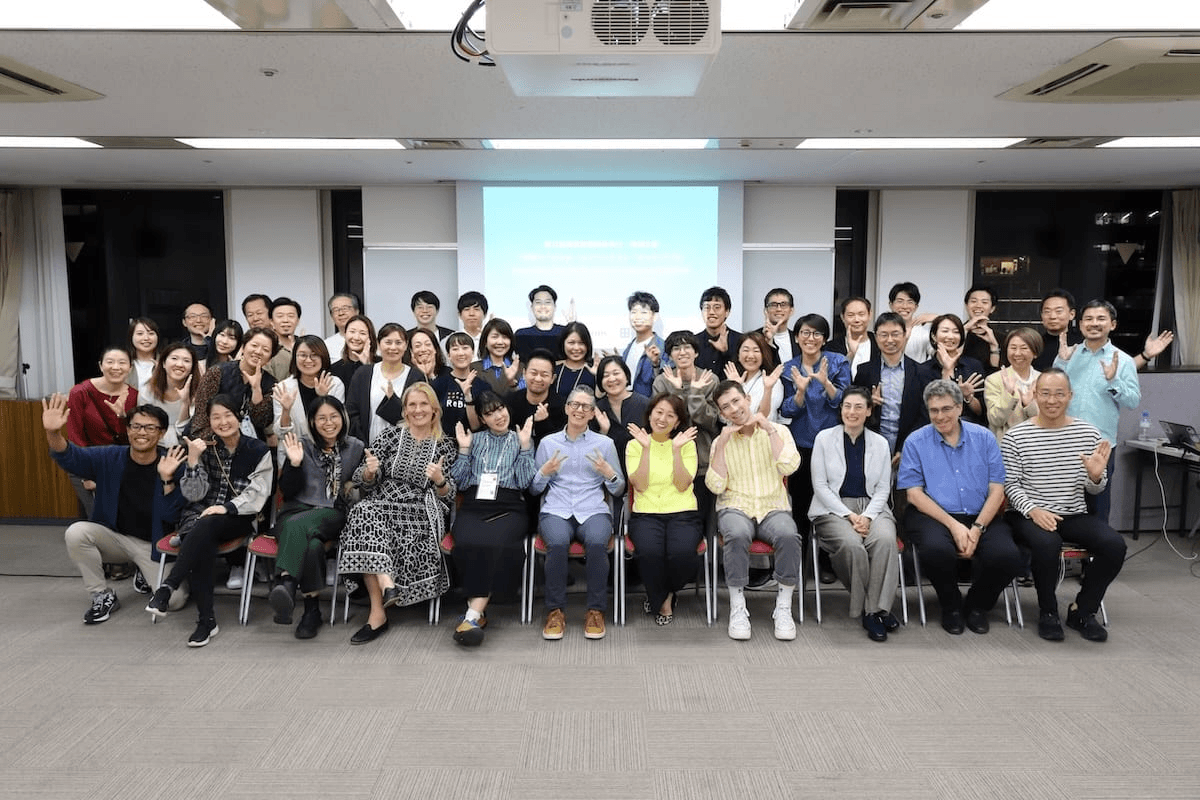
In this context, at the end of October 2025, ETIC and Cross Fields co-hosted—under a grant from the U.S.–Japan Foundation and with the cooperation of the Japan Association of New Public (JANP)—the inaugural two-day program Japan-U.S. Social Innovation Network (“JUSSIN”), designed to generate dialogue that could spark new solutions through knowledge exchange and relationship-building between social sector leaders from both countries.
The theme of the first JUSSIN program, envisioned as the beginning of a decade-long exchange effort, was: “NPO Leadership for Navigating a Complex Society: Exploring New Visions for Civil Society and Our Organizations.”
Five guest leaders were invited from the United States, and 35 social sector leaders from across Japan came together to explore new approaches beyond service delivery and sustainable revenue models—approaches aimed at influencing broader social systems and finding new breakthroughs for impact.
Building a Decade of Exchange Between Japanese and American Social Sector Leaders
The story began in 2024, when Daichi Konuma—Co-Founder of the Japan Philanthropic Association and CEO of Cross Fields, an organization connecting business professionals with social issues worldwide—participated in a U.S.–Japan Foundation leadership program for social entrepreneurs in the United States. There he met Cosmo Fujiyama Gaznavi, a partner at The Management Center who supports social sector leaders in the U.S.
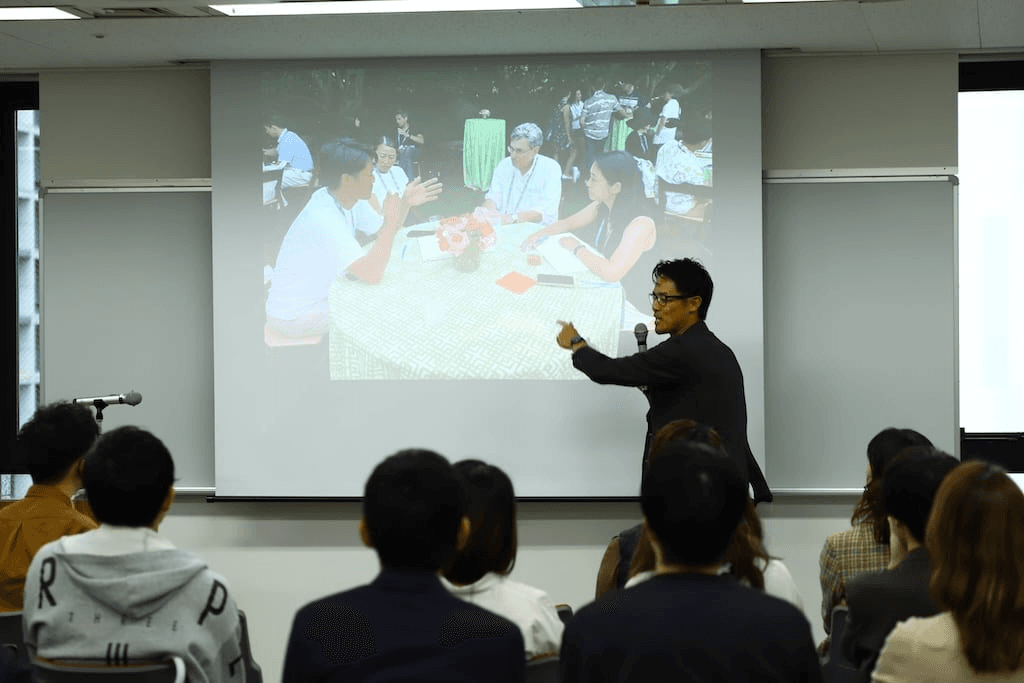
(On the first morning of the program, Mr. Konuma shared the story of how JUSSIN began.)
Cosmo is a second-generation Japanese American born in San Francisco to parents who immigrated to the U.S. to work as ski instructors and start a tourism business. As a student, she co-founded a nonprofit organization in Honduras working to address educational inequities. She later served as Managing Director of the Center for Social Impact Strategy at the University of Pennsylvania, leading executive education programs for nonprofit leaders globally. Her career also includes experience at Ashoka, the world’s largest global network of social entrepreneurs, and a master’s degree in nonprofit management from New York University.
Inspired by their shared passion, Konuma and Cosmo pitched the concept of “JUSSIN” to the U.S.–Japan Foundation’s executive director during the leadership program. With the foundation’s support for this first step, the initiative moved from concept to reality in just one year—an impressive speed.
The U.S. guests were selected by Cosmo based on challenges facing Japan’s social sector, which ETIC and Cross Fields had shared with her. Despite navigating rapid policy shifts in the U.S. federal government, five leaders traveled to Japan to join the program.
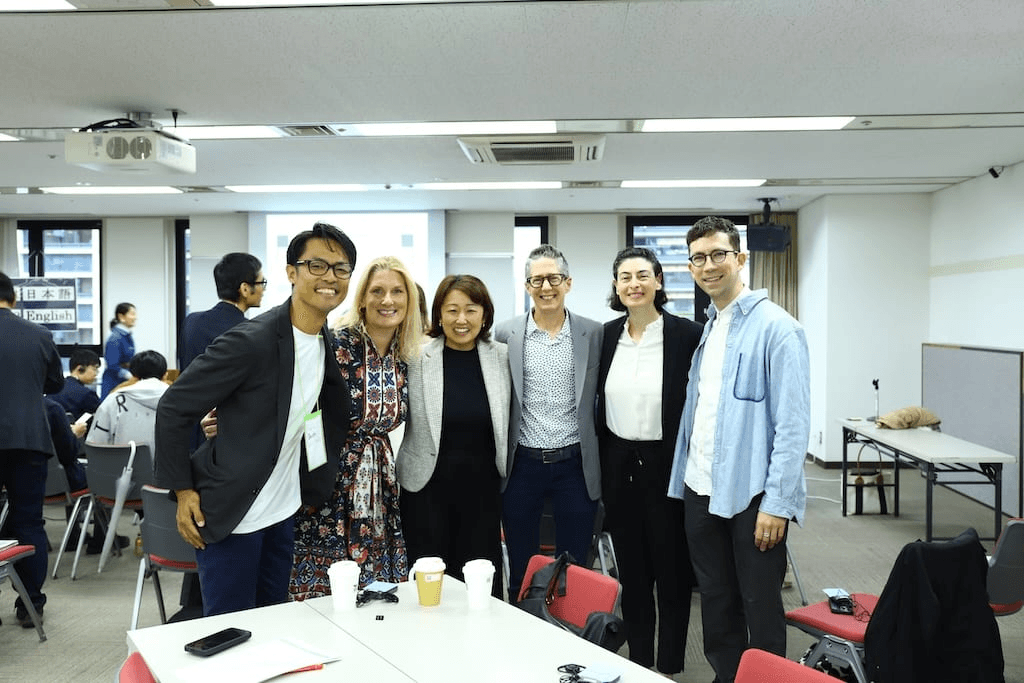
(Caption: Konuma on the far left, Cosmo third from the left, together with the U.S. guest leaders.)
The Social Sector: An Indispensable Pillar of the U.S. Civil Society—And the Challenges Its Leaders Face Today
On the first day of the program, participants attended lectures by the five guest speakers followed by a dinner reception. In the opening session, Cosmo spoke on the theme: “The Current State of Civil Society in the U.S.: Challenges and Opportunities Facing Nonprofits.”
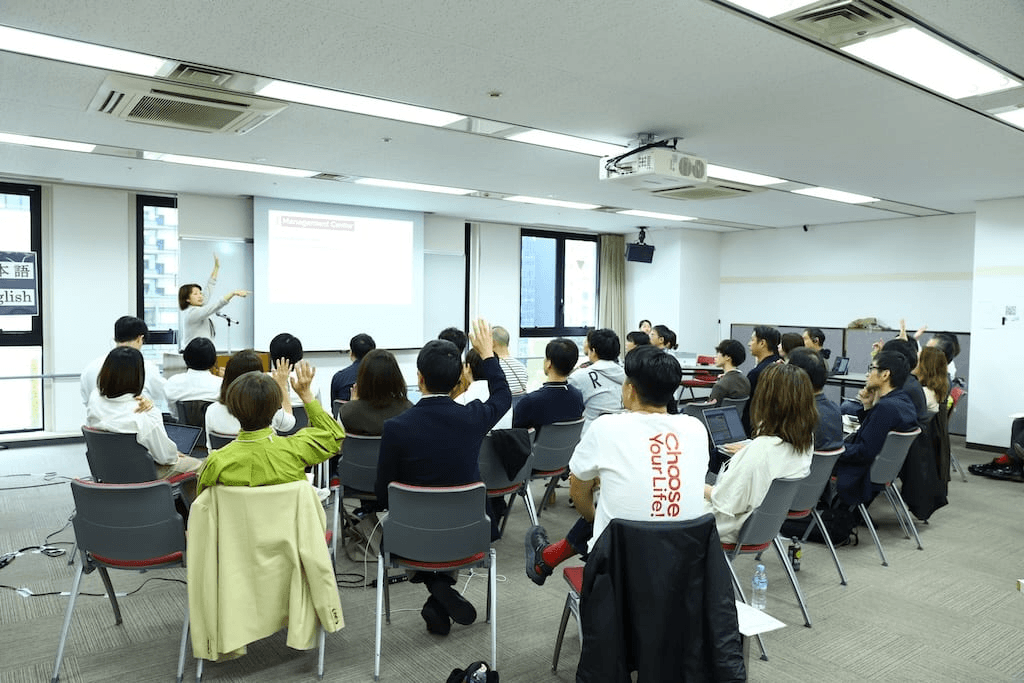
She outlined key structural characteristics of the U.S. social sector compared with Japan. She also described the increasingly difficult environment nonprofits face, including federal funding freezes and intensified scrutiny of nonprofits and foundations—particularly those supporting immigrants. This has contributed to declining donations not only from corporations but also from individual philanthropists. She spoke candidly about the difficult decisions leaders confront daily, including layoffs and program reductions, and how unprecedented levels of solidarity have emerged among organizations striving to survive.

“The numbers keep changing by the day,” Cosmo noted, describing an urgent reality. Approximately 1.5 million nonprofits currently operate in the U.S., employing 12.8 million people—making the sector the third-largest employer in the country. With no universal healthcare system, nonprofits play a critical role in supporting both citizens’ wellbeing and employment.
Beyond scale, roughly 40% of U.S. nonprofits consist of churches, schools, and fooundation, forming essential pillars of daily life. Federal funding cuts and policy uncertainty directly strain the social sector, and affect students and families.
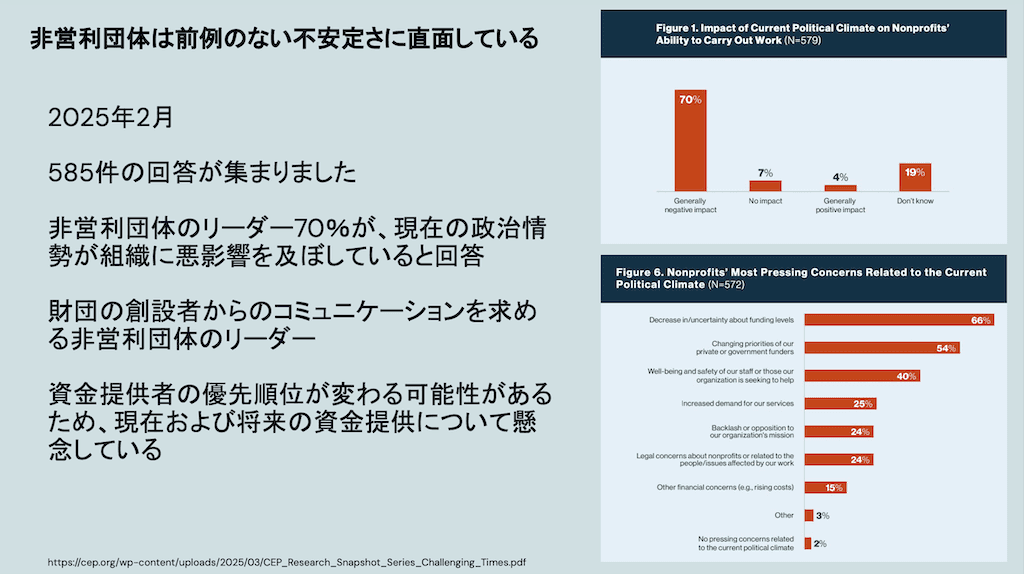
(Slide by Cosmo Fujiyama Gaznavi; based on data from The Center for Effective Philanthropy.)
The room filled with a sense of shock at realities even more severe than many participants had imagined. In later reflections, participants shared that although the scale and urgency may differ, “similar structural vulnerabilities could emerge in Japan.”
When asked about her outlook for the next 10 years, Cosmo suggested that, given growing concerns about political uncertainty and declining trust in institutions, community-based organizations that enable neighbors to help one another quickly may become increasingly central. She referenced lessons from the 2025 Los Angeles wildfire. She also noted that Japan’s community organizations—strengthened by frequent natural disasters such as earthquakes—may prove to be remarkably powerful actors.
With these reflections in mind, participants began preparing themselves for the next session: “Learning from the Real Experiences of U.S. NPO Leaders Working on the Frontlines."
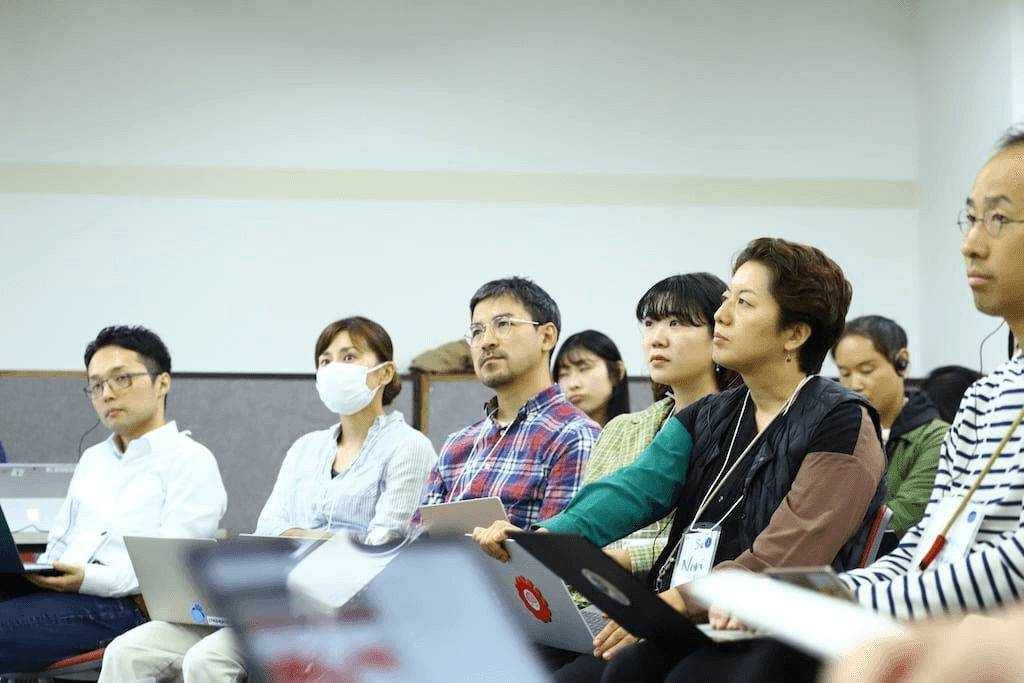
“Knowledge Is Like a Candle—It Burns Brighter When Shared”: Ariel Schwartz, University of Pennsylvania
After participant introductions and lunch, the afternoon featured an “inspire session” with the five guest leaders.
The first speaker was Ariel Schwartz, Managing Director of the Center for Social Impact Strategy (CSIS) at the University of Pennsylvania’s School of Social Policy & Practice (SP2). She also teaches courses in the Nonprofit Leadership Master’s Program on Social Entrepreneurship, Social Innovation, International Development, and Leading Social Change.
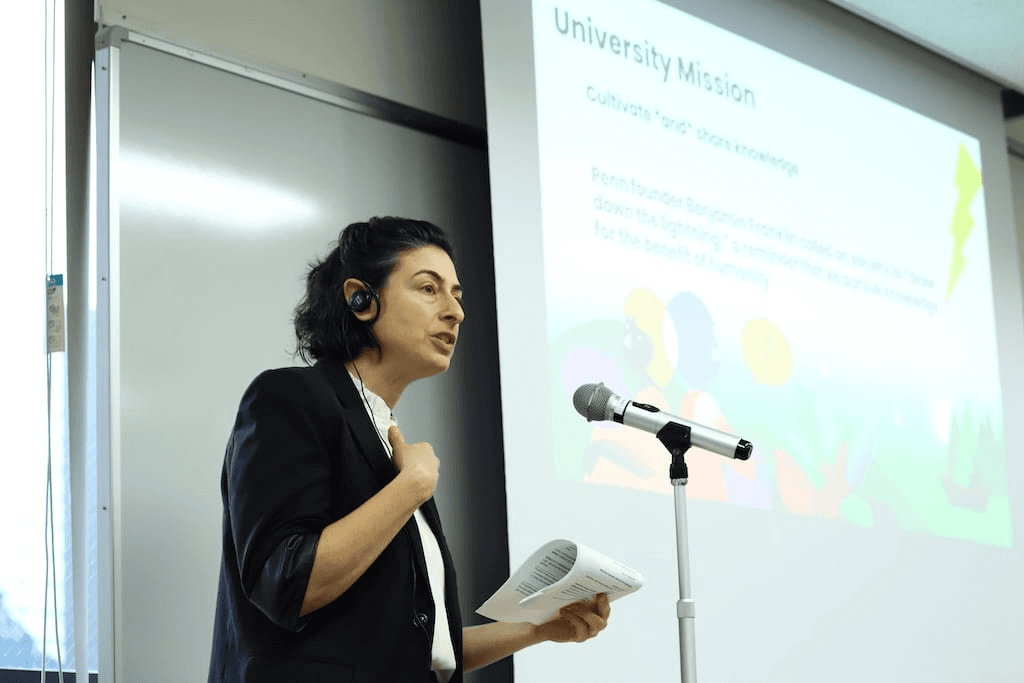
Ariel shared that her great-grandparents fled Eastern Europe to escape discrimination and violence, and that growing up with this family history shaped her awareness of structural injustice. She began her career as a program coordinator at Columbia University’s Initiative for Policy Dialogue (IPD) , supporting policymakers in developing countries.
During her doctoral studies, she researched how health workers in low-literacy regions use mobile phones to support maternal health. In 2008, she co-founded Maria’s Libraries, a nonprofit supporting literacy and community participation through local libraries in Kenya. She then joined CSIS at the University of Pennsylvania, where she has spent the past decade supporting changemakers through academic programs.
The IPD founder and co-president, the economist Joseph Stiglitz, often repeated an adage that deeply shaped her philosophy and values: “Knowledge is like a candle. When you light someone else’s candle, you do not lose your own light—instead, together, you make the world brighter.”
She explained how this belief drives her commitment to accessible education.
For decades, universities have been striving to open their doors, and become more accessible to students of all socioeconomic groups. . I am really proud of the efforts that Penn has made in this arena, through providing a free education to any undergraduate in a family earning less than $200,000 USD per year, and in making access and affordability a continuing priority area for innovation.
CSIS was founded about 10 years ago to support this effort to make high-quality education widely available, especially to people all over the world with missions to improve society. Through non-degree programs, we aim to make university-level learning accessible to all. By practicing human-centered education and modeling principles of leadership, we challenge traditional academic norms. ”
Ariel concluded by citing Innovation and Social Impact, sharing three areas of learning she believes all effective social impact leaders should continue pursuing. Ariel encouraged the group to keep learning about 1) their mission how their own evolving identity and passions, and that of their community and collaborators, shapes that mission, 2) the problem area or social impact area they care about, and 3) the tools that support good decisions to build healthy organizations and effective interventions. Curious collaborators and lifelong learners are well-positioned for social innovation and social impact!
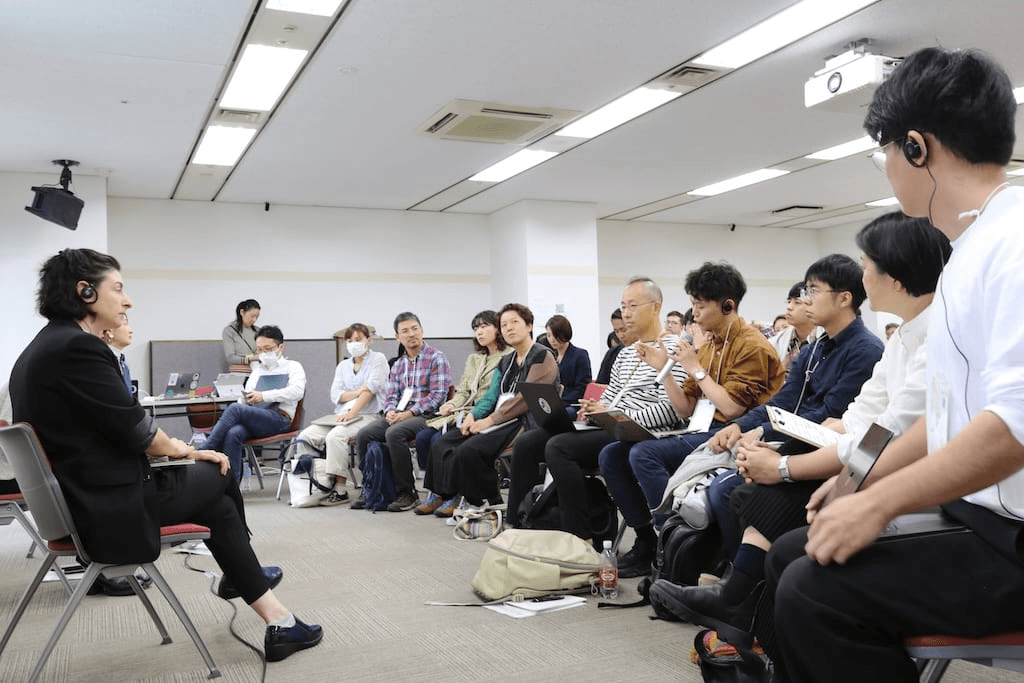
Believing in Young People's Power to Change the World — Joshua Lavra, Hopelab
The second speaker was Joshua Lavra—an artist, creative strategist, and program leader based in New York. His work spans design, science, and philanthropy, with a strong interest in queerness, identity, and the intersections of science and art. He currently serves as Principal at Hopelab, developing programs focused on youth leadership, mental health, technology, and social impact.
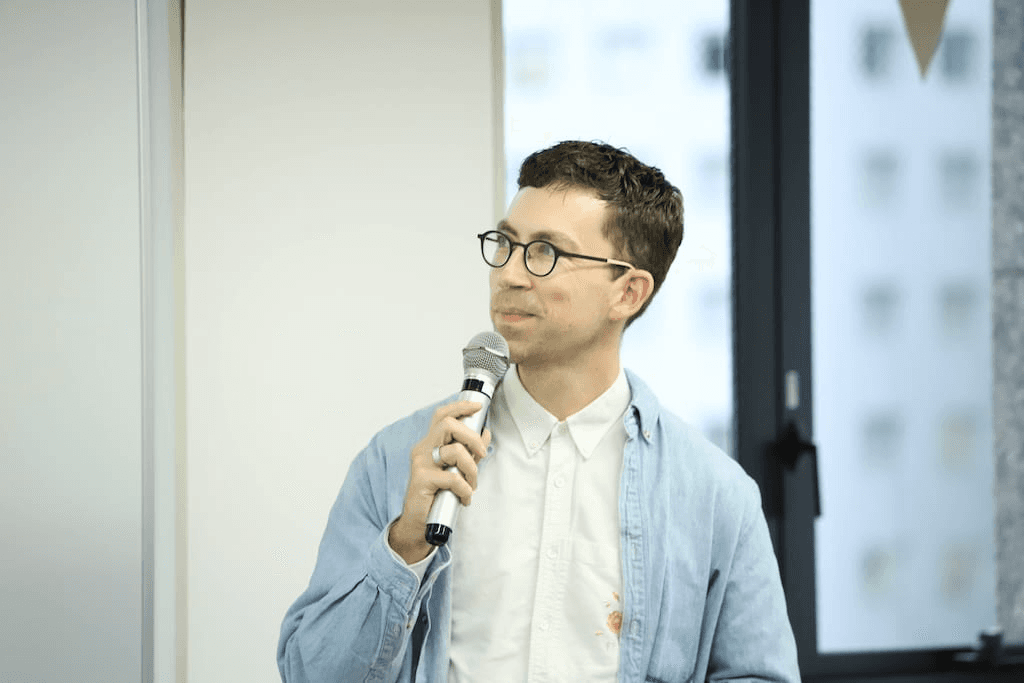
Joshua studied chemical engineering at Penn State University, where he became interested in real-world applications of chemistry and science. He went on to develop multiple products, including two patented inventions. One breakthrough project—a self-service industrial vending machine developed in partnership with the world’s largest industrial gas supplier—pushed him to explore the question: “Is it possible to innovate inside large organizations?” His TEDx talk on this topic sparked a deeper passion for the role of design in driving innovation.
He later researched innovation strategies across more than 100 global companies at design firm IDEO, worked on climate and cutural projects at Swedish design agency Doberman, and ultimately joined Hopelab.
“What I love about Hopelab is that we bridge mind and heart—and we always work with young people,not just for them,” he said. For example, in building imi.guide, a free digital mental health tool for LGBTQ youth, Hopelab partnered with over 600 young people. Research shows that using the tool for just 10 minutes reduces stress.
Joshua also helps lead the Responsible Technology Youth Power Fund, a pooled fund supported by 17 philanthropic partners that distributes roughly USD 3 million annually. “We believe young people have the power to change systems and the world. Five youth who were previously grant recipients now serve as decision-makers in running the fund.”
Hopelab also invests in for-profit startups addressing equity in mental health and wellbeing—from AI therapy tools to companies partnering with Medicaid. To date, they have invested in more than 20 startups.
“I’m deeply interested in intergenerational power-sharing—how we listen to young people, and how we share power with them. I often referncence back to the disability rights movement in the U.S. in the 1990s and its phrase: ‘Nothing about us, without us.’ The only way forward is not ‘for’ others, but ‘with’.”
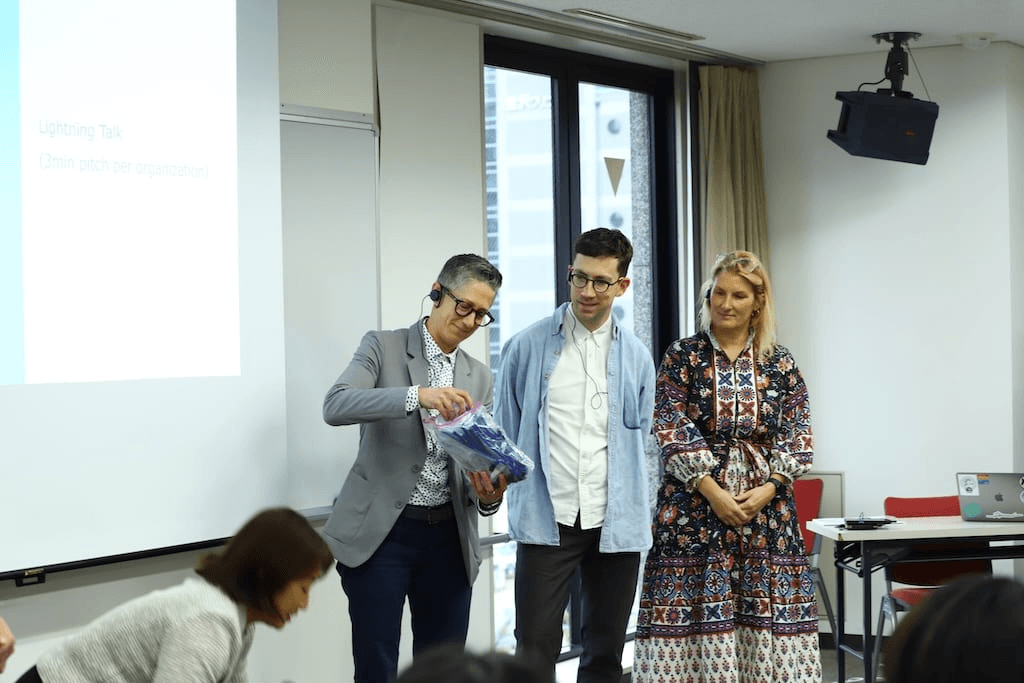
(Although the program included many serious discussions, there were also plenty of joyful moments—like receiving a big assortment of American snacks as souvenirs!)
The second half of the report—featuring lectures from the remaining two guest speakers and highlights from Day 2 of the program—will be published in January 2026.
This article is an English translation of a post originally published on ETIC's DRIVE Media in December 2025. Read the original article here.
The “DRIVE Media” platform operated by the nonprofit organization ETIC has supported social entrepreneurs for 25 years since 2001. ETIC’s network of social entrepreneurs has expanded across national borders, fostering many memorable encounters with leaders in Europe, the United States, and Asia.
In this context, at the end of October 2025, ETIC and Cross Fields co-hosted—under a grant from the U.S.–Japan Foundation and with the cooperation of the Japan Association of New Public (JANP)—the inaugural two-day program Japan-U.S. Social Innovation Network (“JUSSIN”), designed to generate dialogue that could spark new solutions through knowledge exchange and relationship-building between social sector leaders from both countries.
The theme of the first JUSSIN program, envisioned as the beginning of a decade-long exchange effort, was: “NPO Leadership for Navigating a Complex Society: Exploring New Visions for Civil Society and Our Organizations.”
Five guest leaders were invited from the United States, and 35 social sector leaders from across Japan came together to explore new approaches beyond service delivery and sustainable revenue models—approaches aimed at influencing broader social systems and finding new breakthroughs for impact.
Building a Decade of Exchange Between Japanese and American Social Sector Leaders
The story began in 2024, when Daichi Konuma—Co-Founder of the Japan Philanthropic Association and CEO of Cross Fields, an organization connecting business professionals with social issues worldwide—participated in a U.S.–Japan Foundation leadership program for social entrepreneurs in the United States. There he met Cosmo Fujiyama Gaznavi, a partner at The Management Center who supports social sector leaders in the U.S.
(On the first morning of the program, Mr. Konuma shared the story of how JUSSIN began.)
Cosmo is a second-generation Japanese American born in San Francisco to parents who immigrated to the U.S. to work as ski instructors and start a tourism business. As a student, she co-founded a nonprofit organization in Honduras working to address educational inequities. She later served as Managing Director of the Center for Social Impact Strategy at the University of Pennsylvania, leading executive education programs for nonprofit leaders globally. Her career also includes experience at Ashoka, the world’s largest global network of social entrepreneurs, and a master’s degree in nonprofit management from New York University.
Inspired by their shared passion, Konuma and Cosmo pitched the concept of “JUSSIN” to the U.S.–Japan Foundation’s executive director during the leadership program. With the foundation’s support for this first step, the initiative moved from concept to reality in just one year—an impressive speed.
The U.S. guests were selected by Cosmo based on challenges facing Japan’s social sector, which ETIC and Cross Fields had shared with her. Despite navigating rapid policy shifts in the U.S. federal government, five leaders traveled to Japan to join the program.
(Caption: Konuma on the far left, Cosmo third from the left, together with the U.S. guest leaders.)
The Social Sector: An Indispensable Pillar of the U.S. Civil Society—And the Challenges Its Leaders Face Today
On the first day of the program, participants attended lectures by the five guest speakers followed by a dinner reception. In the opening session, Cosmo spoke on the theme: “The Current State of Civil Society in the U.S.: Challenges and Opportunities Facing Nonprofits.”
She outlined key structural characteristics of the U.S. social sector compared with Japan. She also described the increasingly difficult environment nonprofits face, including federal funding freezes and intensified scrutiny of nonprofits and foundations—particularly those supporting immigrants. This has contributed to declining donations not only from corporations but also from individual philanthropists. She spoke candidly about the difficult decisions leaders confront daily, including layoffs and program reductions, and how unprecedented levels of solidarity have emerged among organizations striving to survive.
“The numbers keep changing by the day,” Cosmo noted, describing an urgent reality. Approximately 1.5 million nonprofits currently operate in the U.S., employing 12.8 million people—making the sector the third-largest employer in the country. With no universal healthcare system, nonprofits play a critical role in supporting both citizens’ wellbeing and employment.
Beyond scale, roughly 40% of U.S. nonprofits consist of churches, schools, and fooundation, forming essential pillars of daily life. Federal funding cuts and policy uncertainty directly strain the social sector, and affect students and families.
(Slide by Cosmo Fujiyama Gaznavi; based on data from The Center for Effective Philanthropy.)
The room filled with a sense of shock at realities even more severe than many participants had imagined. In later reflections, participants shared that although the scale and urgency may differ, “similar structural vulnerabilities could emerge in Japan.”
When asked about her outlook for the next 10 years, Cosmo suggested that, given growing concerns about political uncertainty and declining trust in institutions, community-based organizations that enable neighbors to help one another quickly may become increasingly central. She referenced lessons from the 2025 Los Angeles wildfire. She also noted that Japan’s community organizations—strengthened by frequent natural disasters such as earthquakes—may prove to be remarkably powerful actors.
With these reflections in mind, participants began preparing themselves for the next session: “Learning from the Real Experiences of U.S. NPO Leaders Working on the Frontlines."
“Knowledge Is Like a Candle—It Burns Brighter When Shared”: Ariel Schwartz, University of Pennsylvania
After participant introductions and lunch, the afternoon featured an “inspire session” with the five guest leaders.
The first speaker was Ariel Schwartz, Managing Director of the Center for Social Impact Strategy (CSIS) at the University of Pennsylvania’s School of Social Policy & Practice (SP2). She also teaches courses in the Nonprofit Leadership Master’s Program on Social Entrepreneurship, Social Innovation, International Development, and Leading Social Change.
Ariel shared that her great-grandparents fled Eastern Europe to escape discrimination and violence, and that growing up with this family history shaped her awareness of structural injustice. She began her career as a program coordinator at Columbia University’s Initiative for Policy Dialogue (IPD) , supporting policymakers in developing countries.
During her doctoral studies, she researched how health workers in low-literacy regions use mobile phones to support maternal health. In 2008, she co-founded Maria’s Libraries, a nonprofit supporting literacy and community participation through local libraries in Kenya. She then joined CSIS at the University of Pennsylvania, where she has spent the past decade supporting changemakers through academic programs.
The IPD founder and co-president, the economist Joseph Stiglitz, often repeated an adage that deeply shaped her philosophy and values: “Knowledge is like a candle. When you light someone else’s candle, you do not lose your own light—instead, together, you make the world brighter.”
She explained how this belief drives her commitment to accessible education.
For decades, universities have been striving to open their doors, and become more accessible to students of all socioeconomic groups. . I am really proud of the efforts that Penn has made in this arena, through providing a free education to any undergraduate in a family earning less than $200,000 USD per year, and in making access and affordability a continuing priority area for innovation.
CSIS was founded about 10 years ago to support this effort to make high-quality education widely available, especially to people all over the world with missions to improve society. Through non-degree programs, we aim to make university-level learning accessible to all. By practicing human-centered education and modeling principles of leadership, we challenge traditional academic norms. ”
Ariel concluded by citing Innovation and Social Impact, sharing three areas of learning she believes all effective social impact leaders should continue pursuing. Ariel encouraged the group to keep learning about 1) their mission how their own evolving identity and passions, and that of their community and collaborators, shapes that mission, 2) the problem area or social impact area they care about, and 3) the tools that support good decisions to build healthy organizations and effective interventions. Curious collaborators and lifelong learners are well-positioned for social innovation and social impact!
Believing in Young People's Power to Change the World — Joshua Lavra, Hopelab
The second speaker was Joshua Lavra—an artist, creative strategist, and program leader based in New York. His work spans design, science, and philanthropy, with a strong interest in queerness, identity, and the intersections of science and art. He currently serves as Principal at Hopelab, developing programs focused on youth leadership, mental health, technology, and social impact.
Joshua studied chemical engineering at Penn State University, where he became interested in real-world applications of chemistry and science. He went on to develop multiple products, including two patented inventions. One breakthrough project—a self-service industrial vending machine developed in partnership with the world’s largest industrial gas supplier—pushed him to explore the question: “Is it possible to innovate inside large organizations?” His TEDx talk on this topic sparked a deeper passion for the role of design in driving innovation.
He later researched innovation strategies across more than 100 global companies at design firm IDEO, worked on climate and cutural projects at Swedish design agency Doberman, and ultimately joined Hopelab.
“What I love about Hopelab is that we bridge mind and heart—and we always work with young people,not just for them,” he said. For example, in building imi.guide, a free digital mental health tool for LGBTQ youth, Hopelab partnered with over 600 young people. Research shows that using the tool for just 10 minutes reduces stress.
Joshua also helps lead the Responsible Technology Youth Power Fund, a pooled fund supported by 17 philanthropic partners that distributes roughly USD 3 million annually. “We believe young people have the power to change systems and the world. Five youth who were previously grant recipients now serve as decision-makers in running the fund.”
Hopelab also invests in for-profit startups addressing equity in mental health and wellbeing—from AI therapy tools to companies partnering with Medicaid. To date, they have invested in more than 20 startups.
“I’m deeply interested in intergenerational power-sharing—how we listen to young people, and how we share power with them. I often referncence back to the disability rights movement in the U.S. in the 1990s and its phrase: ‘Nothing about us, without us.’ The only way forward is not ‘for’ others, but ‘with’.”
(Although the program included many serious discussions, there were also plenty of joyful moments—like receiving a big assortment of American snacks as souvenirs!)
The second half of the report—featuring lectures from the remaining two guest speakers and highlights from Day 2 of the program—will be published in January 2026.