
Events
Updates
JUSSIN’s First U.S. Gathering: Where Two Ecosystems Meet
JUSSIN’s First U.S. Gathering: Where Two Ecosystems Meet
JUSSIN’s First U.S. Gathering: Where Two Ecosystems Meet
On August 1, JUSSIN brought together 24 leaders across social impact, business, and philanthropy from the U.S. and Japan for our San Francisco Impact Salon, an afternoon built to strengthen a bilateral network of social innovation.
Cosmo Fujiyama Ghaznavi opened by sharing why she co-founded JUSSIN with Daichi Konuma, and the vision that carries it: a bridge between Japan and the U.S. to build solutions to shared challenges. Lauren E. Ito spoke to the opportunity ahead, offering JUSSIN through the lens of ecotones and the in-between zones where two ecosystems meet and something entirely new takes root. Jake Schlesinger, President of the United States-Japan Foundation, spoke to the Foundation's role backing JUSSIN and why this moment matters for both countries, and Naho Kawashima reflected on ETIC's three decades in Japan's social-impact sector, their role as JUSSIN's fiscal sponsor, and what's shifting in Japan today.
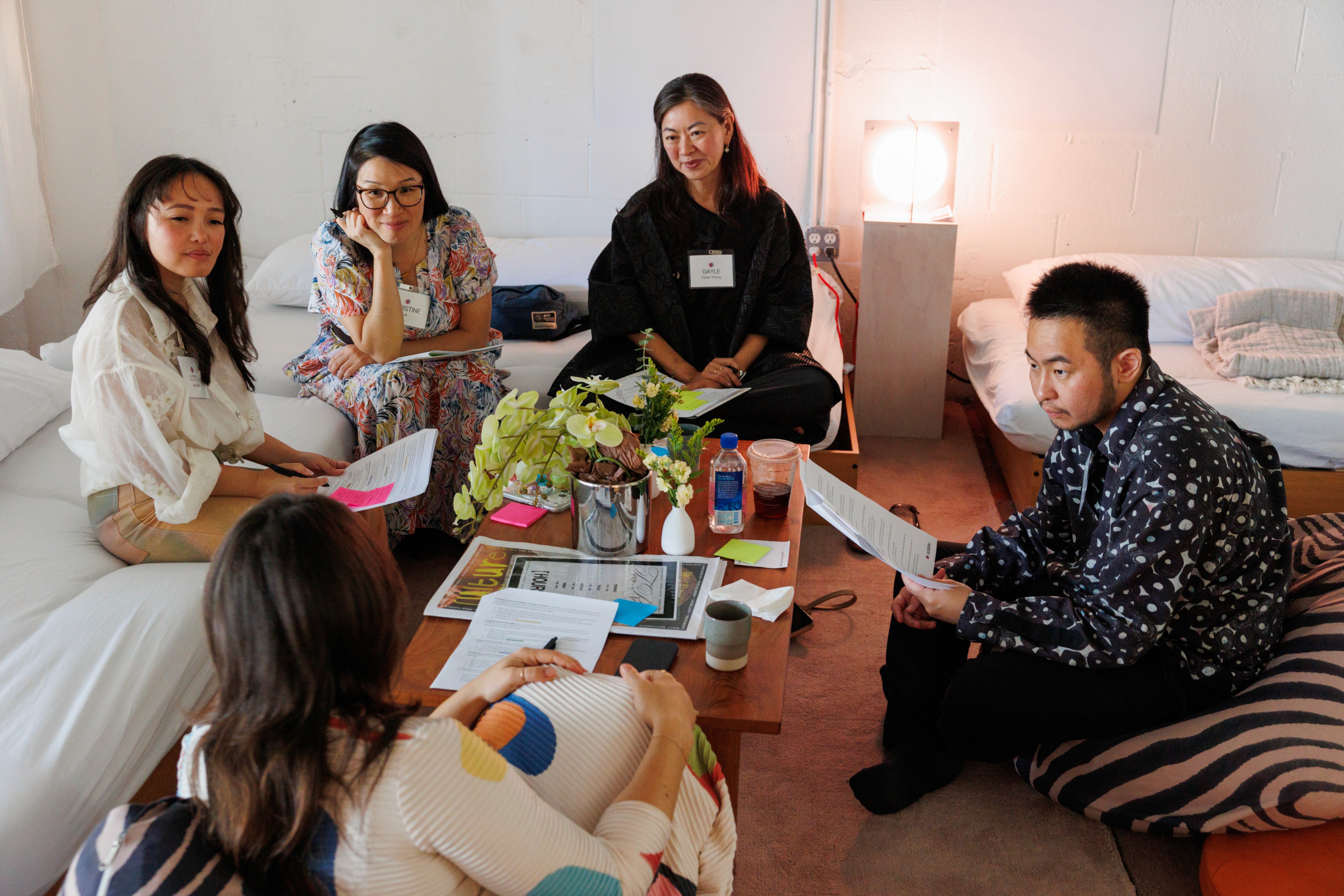
From there, we opened the room itself: trios, then a full circle, everyone sharing what brought them to the table. Five conversations, hosted by Haruto Okabe, Jake Schlesinger, Naho Kawashima, Cosmo Fujiyama Ghaznavi, and Christine Lai, explored the questions shaping this moment: community resilience, next-generation leadership, cross-Pacific learning, executive leadership under continual crisis, and the future of funding, all held in the light-filled setting of Kindred Studio in San Francisco.
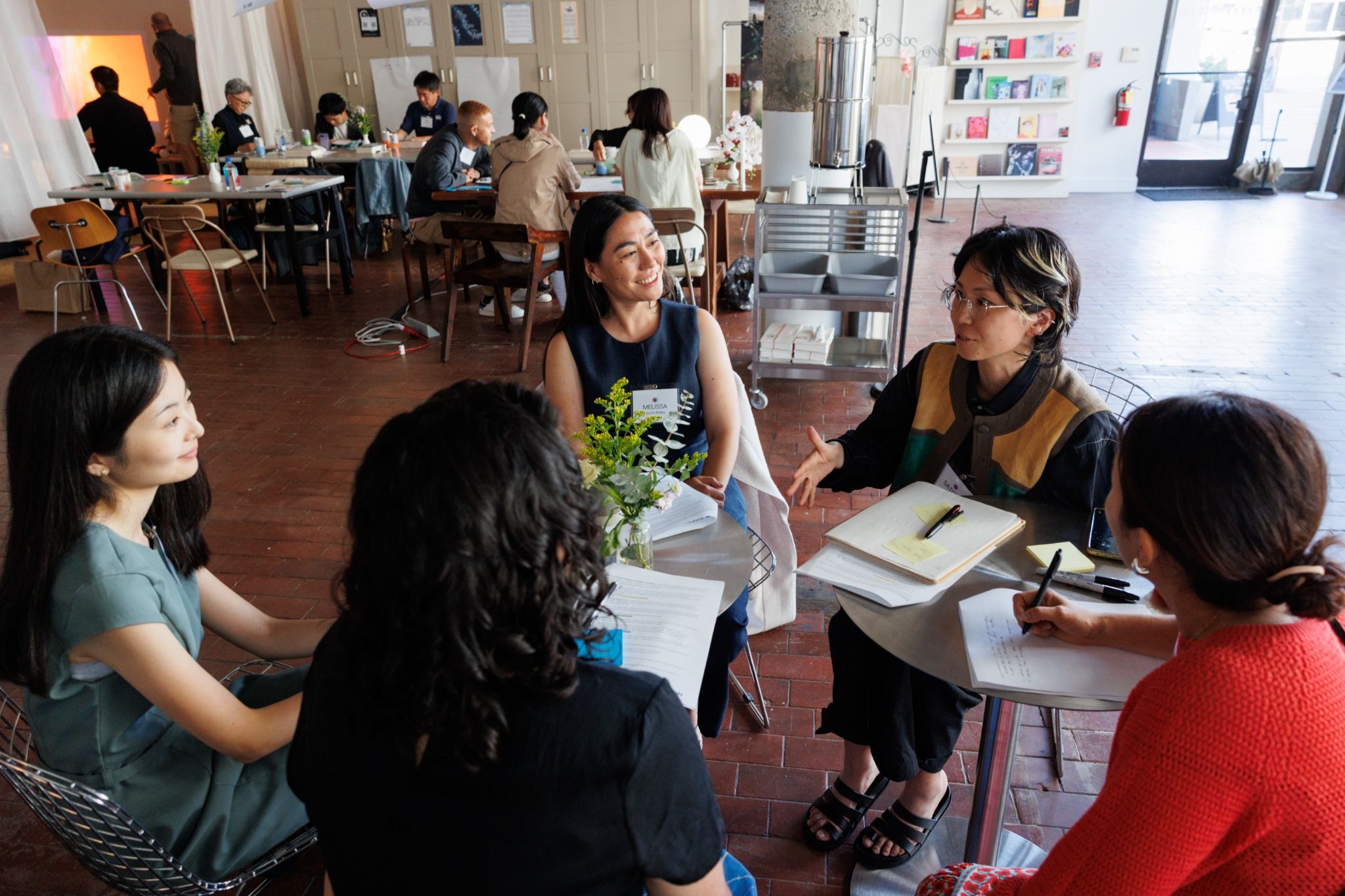
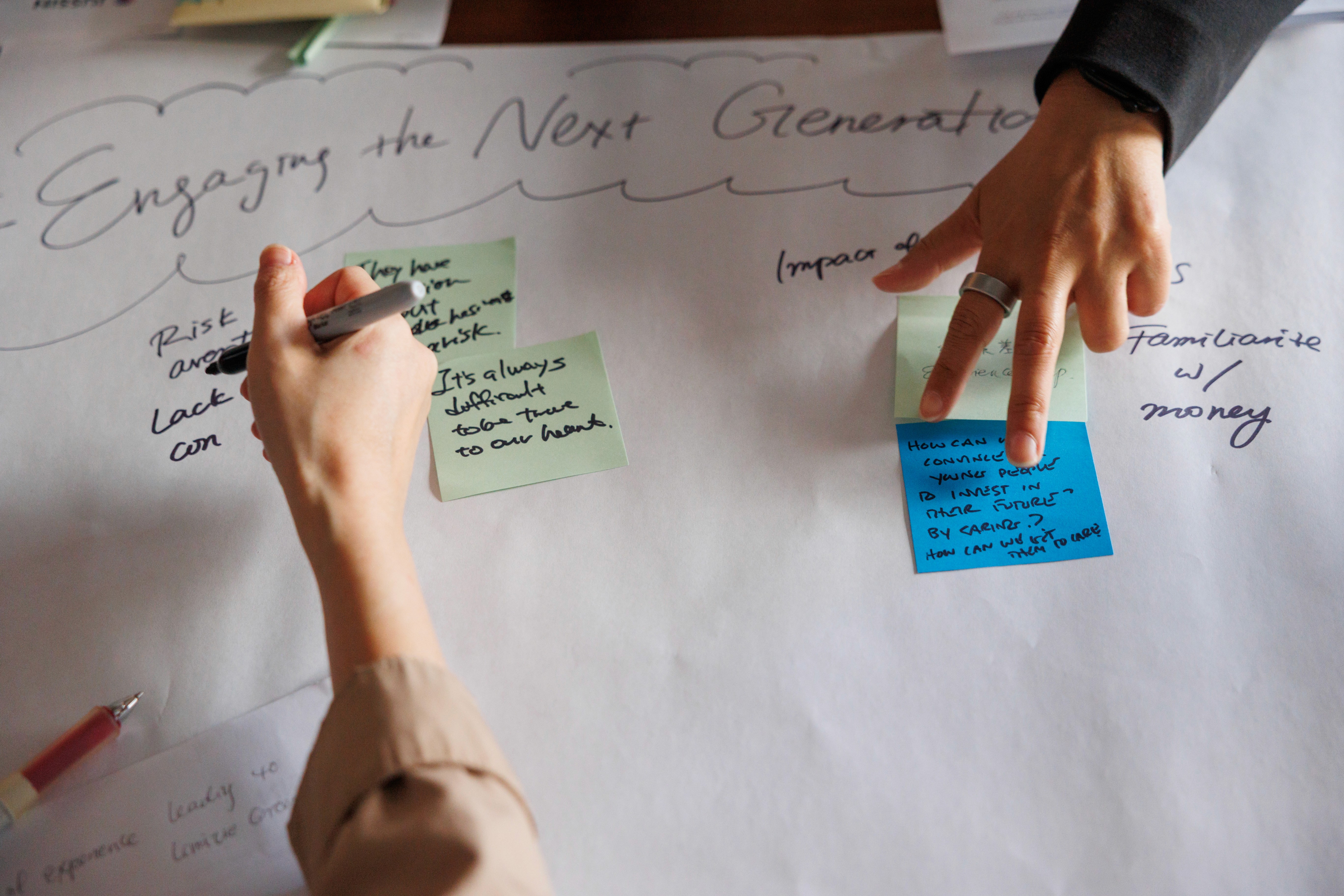
What emerged was a clear thread: leadership right now is less about having every answer and more about cultivating the conditions for trust, discernment, and shared responsibility. Leaders spoke of unlearning heroic, reactive habits and learning to hold paradox, how success and contraction can be true at the same time, and of how transparency can preserve culture, especially when the message is hard. On funding, the conversation turned to what a resilient, grantee-centered ecosystem could look like when the U.S. and Japan learn from each other, especially around the power of community foundations. On resilience, themes of mutual aid and standing up for one another emerged, alongside an insistence on storytelling — a reminder that resilience isn't just surviving the current moment, but what gets carried forward across families, neighbors, and communities. On engaging the next generation, young people's aspirations are shaped by different and similar pressures in the US and Japan, and reaching them requires stronger mentorship and clearer pathways connecting their social values to real jobs in the sector. Across every conversation, one idea kept surfacing: the real work now is building the conditions — relational, cultural, structural — that let people navigate uncertainty together, not alone. What leaders shared with us after the event:
“I was inspired to see that U.S. nonprofit organizations are also eager to learn from Japan. It gave me hope that our different contexts allow us to learn from perspectives and practices that might not exist in our own countries.”
“One takeaway from this experience was how quickly meaningful connection and trust could form across differences in culture, generation, geography, role, and sector. The conversations felt less like networking and more like the beginnings of relationships that could continue to deepen over time.”
“Rather than positioning either country as the model for the other, I’m curious about the possibility of bilateral sensemaking and co-creation: bringing different perspectives, practices, principles, and strengths into relationship as we orient toward a shared future that neither country has fully realized yet.”
“How do we promote sustainability and resilience for our leaders doing such critical work, and how do we help build up the next generation of leaders, who will continue the fight to make our world a better place?”
Next stop: Tokyo this October, then Los Angeles in 2027, with a growing community curious about what we can learn from each other. If these topics sparked something in you, we'd love to have you in the network. #JUSSIN #USJapan #SocialInnovation
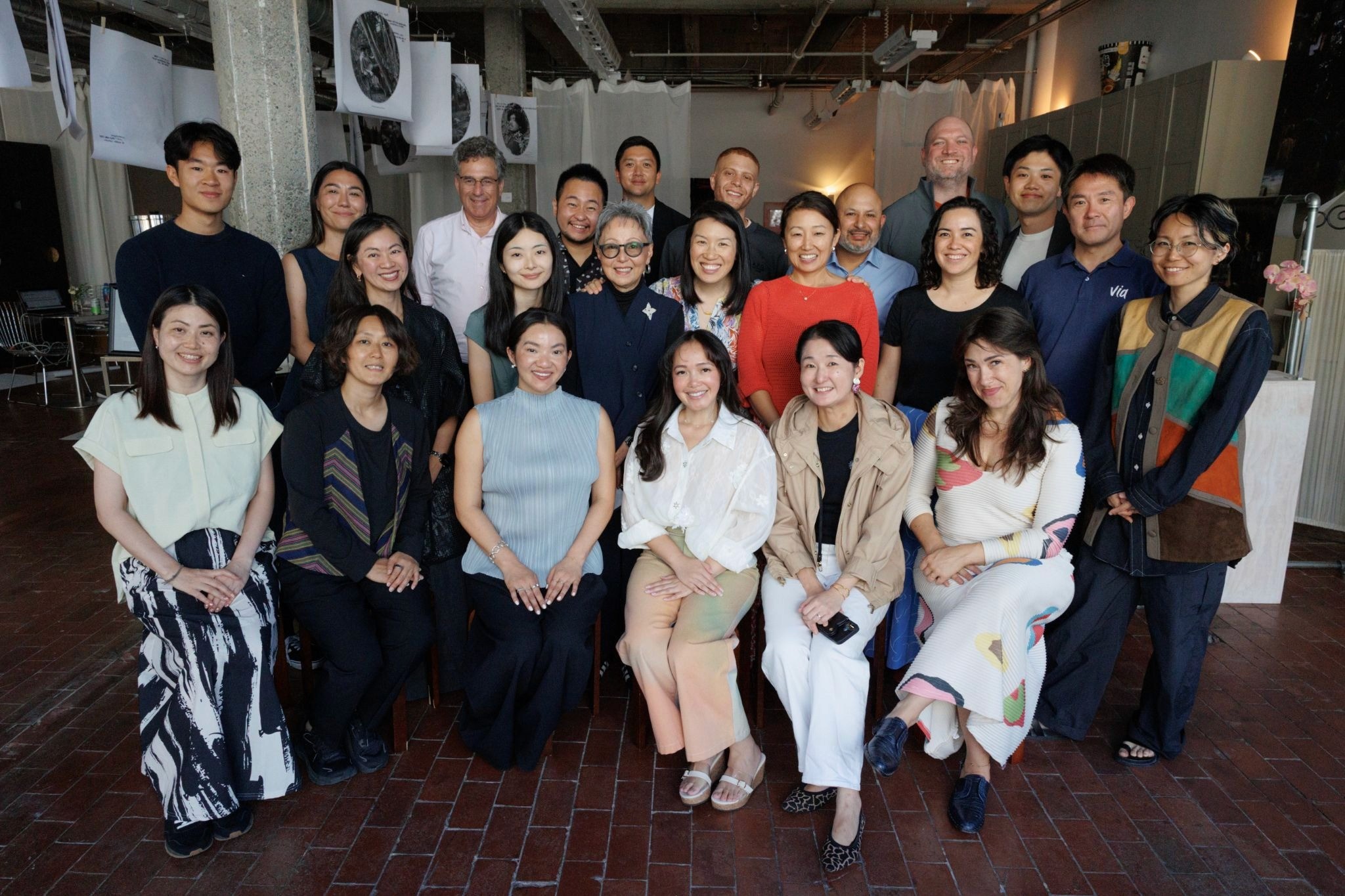
On August 1, JUSSIN brought together 24 leaders across social impact, business, and philanthropy from the U.S. and Japan for our San Francisco Impact Salon, an afternoon built to strengthen a bilateral network of social innovation.
Cosmo Fujiyama Ghaznavi opened by sharing why she co-founded JUSSIN with Daichi Konuma, and the vision that carries it: a bridge between Japan and the U.S. to build solutions to shared challenges. Lauren E. Ito spoke to the opportunity ahead, offering JUSSIN through the lens of ecotones and the in-between zones where two ecosystems meet and something entirely new takes root. Jake Schlesinger, President of the United States-Japan Foundation, spoke to the Foundation's role backing JUSSIN and why this moment matters for both countries, and Naho Kawashima reflected on ETIC's three decades in Japan's social-impact sector, their role as JUSSIN's fiscal sponsor, and what's shifting in Japan today.
From there, we opened the room itself: trios, then a full circle, everyone sharing what brought them to the table. Five conversations, hosted by Haruto Okabe, Jake Schlesinger, Naho Kawashima, Cosmo Fujiyama Ghaznavi, and Christine Lai, explored the questions shaping this moment: community resilience, next-generation leadership, cross-Pacific learning, executive leadership under continual crisis, and the future of funding, all held in the light-filled setting of Kindred Studio in San Francisco.
What emerged was a clear thread: leadership right now is less about having every answer and more about cultivating the conditions for trust, discernment, and shared responsibility. Leaders spoke of unlearning heroic, reactive habits and learning to hold paradox, how success and contraction can be true at the same time, and of how transparency can preserve culture, especially when the message is hard. On funding, the conversation turned to what a resilient, grantee-centered ecosystem could look like when the U.S. and Japan learn from each other, especially around the power of community foundations. On resilience, themes of mutual aid and standing up for one another emerged, alongside an insistence on storytelling — a reminder that resilience isn't just surviving the current moment, but what gets carried forward across families, neighbors, and communities. On engaging the next generation, young people's aspirations are shaped by different and similar pressures in the US and Japan, and reaching them requires stronger mentorship and clearer pathways connecting their social values to real jobs in the sector. Across every conversation, one idea kept surfacing: the real work now is building the conditions — relational, cultural, structural — that let people navigate uncertainty together, not alone. What leaders shared with us after the event:
“I was inspired to see that U.S. nonprofit organizations are also eager to learn from Japan. It gave me hope that our different contexts allow us to learn from perspectives and practices that might not exist in our own countries.”
“One takeaway from this experience was how quickly meaningful connection and trust could form across differences in culture, generation, geography, role, and sector. The conversations felt less like networking and more like the beginnings of relationships that could continue to deepen over time.”
“Rather than positioning either country as the model for the other, I’m curious about the possibility of bilateral sensemaking and co-creation: bringing different perspectives, practices, principles, and strengths into relationship as we orient toward a shared future that neither country has fully realized yet.”
“How do we promote sustainability and resilience for our leaders doing such critical work, and how do we help build up the next generation of leaders, who will continue the fight to make our world a better place?”
Next stop: Tokyo this October, then Los Angeles in 2027, with a growing community curious about what we can learn from each other. If these topics sparked something in you, we'd love to have you in the network. #JUSSIN #USJapan #SocialInnovation