
Publications
Introducing Cosmo Fujiyama Ghaznavi, Partner at The Management Center
Introducing Cosmo Fujiyama Ghaznavi, Partner at The Management Center
Introducing Cosmo Fujiyama Ghaznavi, Partner at The Management Center
This article was originally published as part of ETIC's Trailblazer Interview series in November 2025 and is republished here. Read the original article here.
Sometimes, all it takes is a meeting of minds for meaningful projects to take shape.
That was certainly the case for Cosmo Fujiyama Ghaznavi, who launched the Japan–U.S. Social Innovation Network (JUSSIN) together with Daichi Konuma, co-founder and CEO of CrossFields. Recognising unmet needs among civil society leaders in both Japan and the United States, the pair created a platform where social-sector practitioners could exchange ideas, learn from one another, and build a cross-border community of changemakers.
A second-generation Japanese American, Cosmo was born in the United States after her parents immigrated there in the early 1980s. At just nineteen years old, she co-founded a nonprofit organisation in Honduras with her brother.

Cosmo Fujiyama Ghaznavi.
Tell us about your work, and how you came to know ETIC.
I am a Partner at The Management Center, where I build partnerships with philanthropic organisations and support nonprofits in becoming more effective, sustainable, and equitable. My role is to help leaders build resilient organisations so that both their people and their missions can thrive.
I have spent my entire career in the nonprofit sector, supporting mission-driven leaders as they build strong organisations.
I first met Daichi during the U.S.–Japan Leadership Program, hosted by the U.S.–Japan Foundation in Seattle in July 2024. During the fellowship, we exchanged perspectives, ideas, and insights about the nonprofit sectors in the United States and Japan, and those conversations profoundly influenced our thinking. There was so much that we learned from one another.
Together with Jess Sayaka Kankolongo, those conversations inspired us to launch the Japan–U.S. Social Innovation Network (JUSSIN)—a platform designed to connect social-impact leaders across the two countries and foster community, collaboration, and mutual learning.
Daichi introduced me to the ETIC team as a key partner in Japan for the project. Over the following year, I worked closely with Naho, Nicole, and Tomo from ETIC to bring JUSSIN to life. It was an incredible experience.
What social issues are you working to address, and what drew you to these challenges?
Leading a nonprofit organisation is difficult work.
I try to help leaders address burnout, lead with authenticity and confidence, and build sustainable teams that are better equipped to fulfil their missions. I also enjoy working with foundations and philanthropic organisations that support nonprofits through funding and capacity-building initiatives.
At the same time, I am eager to learn more about nonprofit leaders in Japan and the kinds of leadership and management support they need.
Who are you collaborating with now, and who would you like to work with in the future?
Right now, my main focus is on growing JUSSIN and strengthening the connections between social innovation leaders in Japan and the United States.
I would love to meet more leaders across Japan and learn from the innovative ways they are tackling issues such as healthcare, education, elder care, climate resilience, and community-building.
I am also keen to connect with funders in both Japan and the United States who are interested in supporting JUSSIN.
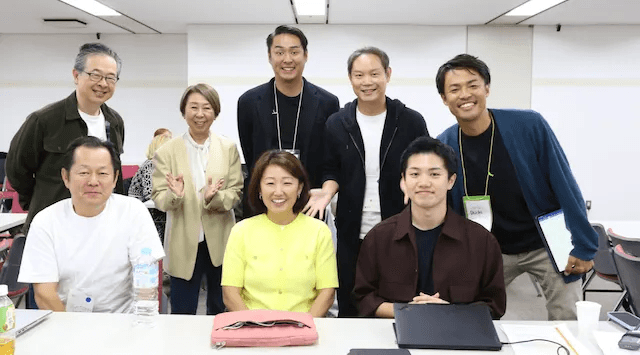
Cosmo with participants in the JUSSIN programme.
What challenges do you face as you move your work forward, and what impact have you been able to create so far?
At the moment, the biggest challenge is finding the right collaborators—and especially funding partners—to help JUSSIN move into its next phase.
We had a wonderful launch in Kobe, and now our goal is to sustain that positive momentum and continue building from it.
Do you have a message for young people interested in starting their own organisations?
I co-founded Students Helping Honduras with my brother while I was nineteen and still at university. He continues to lead the organisation today, and this year they completed construction of their hundredth school in Honduras. We are incredibly proud of what he has accomplished.
If I could offer advice to my nineteen-year-old self, it would be this: enjoy the journey.
The highs and lows are all part of the experience, so surround yourself with kind, honest people who make the work enjoyable.
I also believe that how you build an organisation matters deeply—the policies you create, the structures you put in place, the habits and rituals you cultivate, and the ways people work together.
Invest time in building an organisation that is equitable, sustainable, and focused on meaningful results.
Are there any places abroad you would like to visit, or people you would like to meet?
I would love to spend more time getting to know Japan’s smaller towns and meeting local farmers and community organisers.
I also speak Spanish, and I would love to travel to Colombia to dance salsa.
What is your favourite way to spend your free time?
I enjoy picnics by the sea with my two sons, Hiroki, who is four, and Kotaro, who is two.
If you could take a sabbatical, what would you do?
I would take my family to Japan and live there for several months.
I would learn how to bake Japanese bread, volunteer at a local nursery school, and settle in a small town with a mild climate and a beach within walking distance.
This article was originally published as part of ETIC's Trailblazer Interview series in November 2025 and is republished here. Read the original article here.
Sometimes, all it takes is a meeting of minds for meaningful projects to take shape.
That was certainly the case for Cosmo Fujiyama Ghaznavi, who launched the Japan–U.S. Social Innovation Network (JUSSIN) together with Daichi Konuma, co-founder and CEO of CrossFields. Recognising unmet needs among civil society leaders in both Japan and the United States, the pair created a platform where social-sector practitioners could exchange ideas, learn from one another, and build a cross-border community of changemakers.
A second-generation Japanese American, Cosmo was born in the United States after her parents immigrated there in the early 1980s. At just nineteen years old, she co-founded a nonprofit organisation in Honduras with her brother.
Cosmo Fujiyama Ghaznavi.
Tell us about your work, and how you came to know ETIC.
I am a Partner at The Management Center, where I build partnerships with philanthropic organisations and support nonprofits in becoming more effective, sustainable, and equitable. My role is to help leaders build resilient organisations so that both their people and their missions can thrive.
I have spent my entire career in the nonprofit sector, supporting mission-driven leaders as they build strong organisations.
I first met Daichi during the U.S.–Japan Leadership Program, hosted by the U.S.–Japan Foundation in Seattle in July 2024. During the fellowship, we exchanged perspectives, ideas, and insights about the nonprofit sectors in the United States and Japan, and those conversations profoundly influenced our thinking. There was so much that we learned from one another.
Together with Jess Sayaka Kankolongo, those conversations inspired us to launch the Japan–U.S. Social Innovation Network (JUSSIN)—a platform designed to connect social-impact leaders across the two countries and foster community, collaboration, and mutual learning.
Daichi introduced me to the ETIC team as a key partner in Japan for the project. Over the following year, I worked closely with Naho, Nicole, and Tomo from ETIC to bring JUSSIN to life. It was an incredible experience.
What social issues are you working to address, and what drew you to these challenges?
Leading a nonprofit organisation is difficult work.
I try to help leaders address burnout, lead with authenticity and confidence, and build sustainable teams that are better equipped to fulfil their missions. I also enjoy working with foundations and philanthropic organisations that support nonprofits through funding and capacity-building initiatives.
At the same time, I am eager to learn more about nonprofit leaders in Japan and the kinds of leadership and management support they need.
Who are you collaborating with now, and who would you like to work with in the future?
Right now, my main focus is on growing JUSSIN and strengthening the connections between social innovation leaders in Japan and the United States.
I would love to meet more leaders across Japan and learn from the innovative ways they are tackling issues such as healthcare, education, elder care, climate resilience, and community-building.
I am also keen to connect with funders in both Japan and the United States who are interested in supporting JUSSIN.
Cosmo with participants in the JUSSIN programme.
What challenges do you face as you move your work forward, and what impact have you been able to create so far?
At the moment, the biggest challenge is finding the right collaborators—and especially funding partners—to help JUSSIN move into its next phase.
We had a wonderful launch in Kobe, and now our goal is to sustain that positive momentum and continue building from it.
Do you have a message for young people interested in starting their own organisations?
I co-founded Students Helping Honduras with my brother while I was nineteen and still at university. He continues to lead the organisation today, and this year they completed construction of their hundredth school in Honduras. We are incredibly proud of what he has accomplished.
If I could offer advice to my nineteen-year-old self, it would be this: enjoy the journey.
The highs and lows are all part of the experience, so surround yourself with kind, honest people who make the work enjoyable.
I also believe that how you build an organisation matters deeply—the policies you create, the structures you put in place, the habits and rituals you cultivate, and the ways people work together.
Invest time in building an organisation that is equitable, sustainable, and focused on meaningful results.
Are there any places abroad you would like to visit, or people you would like to meet?
I would love to spend more time getting to know Japan’s smaller towns and meeting local farmers and community organisers.
I also speak Spanish, and I would love to travel to Colombia to dance salsa.
What is your favourite way to spend your free time?
I enjoy picnics by the sea with my two sons, Hiroki, who is four, and Kotaro, who is two.
If you could take a sabbatical, what would you do?
I would take my family to Japan and live there for several months.
I would learn how to bake Japanese bread, volunteer at a local nursery school, and settle in a small town with a mild climate and a beach within walking distance.